
Furniture Clearance Before Moving in London: Donation, Reuse and Moving Options
What if the smoothest move starts by separating what’s leaving from what’s coming with you? Bulky unwanted furniture can complicate timings, access and transport, especially when donation or collection plans don’t line up with moving day. A clear plan for furniture clearance before moving london helps you decide which pieces could be sold, donated or reused, and which need another disposal route.
The right option depends on each item’s condition and, for upholstered furniture, whether it has the fire safety label a charity may require. This guide compares practical reuse, donation and disposal routes in London, so you can choose a suitable next step without letting clearance disrupt your move. It also explains how to organise the furniture you’re taking. Let's Move London provides house removals across London, with insurance included with every move. If belongings can’t go straight to your new home, secure storage offers another option. Plan what leaves, what stays and where each piece needs to go, then move forward with greater peace of mind.
Table of Contents
Furniture Clearance Before Moving in London: Decide What Should Leave
Unwanted furniture can take up valuable space in a van, hallway or new home. Leave decisions until packing is under way, and a bulky wardrobe or sofa can disrupt access, loading plans and the move-day schedule. Start furniture clearance before moving london by deciding which pieces are travelling and arranging a separate destination for everything else.
Furniture clearance means organising a route for items that won’t go to your next home. It’s separate from removals: a clearance or reuse arrangement deals with what’s leaving, while a removals booking transports the belongings you’ve chosen to keep. For context on local approaches, see this overview of Waste disposal in London.
To see an example of a London property clearance, watch this video:
Which furniture should you consider clearing before a move?
Start with pieces most likely to cause difficulty: large wardrobes, dining tables, sofas or cabinets that won’t fit the new layout. Consider each item’s condition, completeness and practical use. A sturdy chair with all its parts may suit reuse; a damaged or incomplete item may need a different route. Decide early about anything that could affect packing, room access or the space your belongings need in transit.
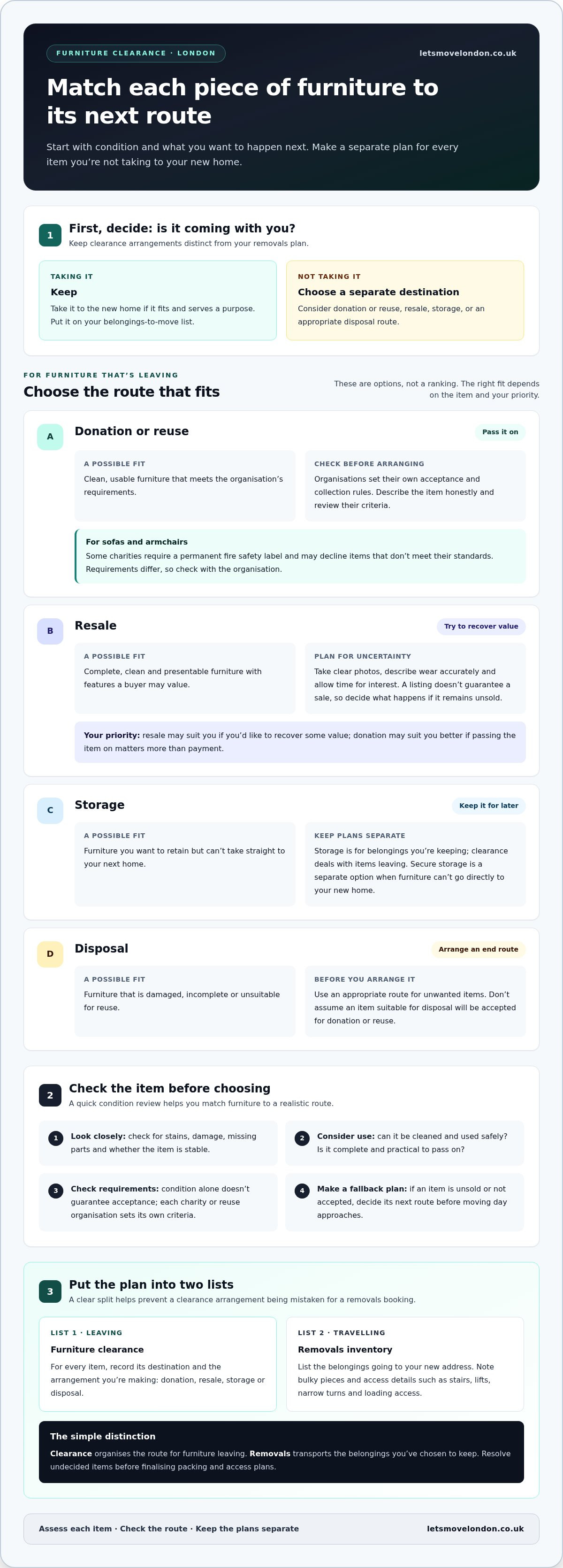
Use a simple item-by-item framework:
Keep: Take it to the new home if it fits and serves a purpose.
Donate or sell: Consider these routes for clean, complete furniture in usable condition. Acceptance requirements vary, so assess the item before making arrangements.
Store: Choose this for furniture you want to retain but can’t move straight to the next home.
Arrange disposal: Use this route for items that aren’t suitable for reuse.
How to separate clearance from your removals plan
Create two distinct lists: furniture leaving the property and belongings travelling to your new address. Beside each item, add its destination and the arrangement you’re making. This helps keep a donation collection, sale or disposal plan separate from the removals inventory. Note any pieces that still need a decision, then resolve them before finalising packing and access plans.
For the items you’re keeping, Let's Move London provides house removals across London, Greater London and surrounding counties, with insurance included with every move. Secure storage with 24/7 CCTV monitoring is a separate option if furniture can’t go directly to your new home. A clear split between what leaves and what travels helps keep both arrangements manageable.
Furniture Donation and Reuse in London: Match Items to the Right Route
Match each piece to its condition and to what matters most to you. A clean, complete table may suit resale or donation, while a damaged item may need a disposal route. With furniture clearance before moving london, there’s no single destination for every unwanted piece. Assess items individually, then make arrangements for them separately from your removals booking.
When might donation or reuse suit your furniture?
Check the item in good light. Look for stains, damage, missing parts, stability and signs that it can be cleaned and used safely. A sound chest of drawers may be more practical to pass on than a broken one, but condition alone doesn’t guarantee acceptance. Charities and reuse organisations set their own requirements, including what they collect and how collection is arranged. Review their stated criteria before setting a date, and describe the item honestly.
Upholstered furniture can have additional requirements. Some charities require a permanent fire safety label on sofas and armchairs, and may decline items that don’t meet their standards. Requirements differ, so check the relevant organisation’s information rather than assuming a particular piece will be accepted. For guidance on household disposal routes, consult UK government guidance on household waste disposal.
When should you sell, store or arrange disposal instead?
If you’d like to recover value, resale may suit furniture that’s clean, complete and appealing to buyers. Take clear photographs, describe wear accurately and allow time for interest to develop. A listing doesn’t guarantee a sale, so decide in advance what you’ll do if the item remains unsold as moving day approaches. Donation may be preferable if passing it on matters more than receiving payment.
Choose storage for furniture you intend to keep but can’t take straight to your next home. Lets Move London provides secure storage with 24/7 CCTV monitoring. Its secure storage guide explains how storage can fit into a move. Furniture you’re keeping can travel with a house removals booking, with insurance included with every move. Keep unwanted-item arrangements separate so collection or disposal plans don’t get mistaken for the removals schedule.
Once you’ve chosen a route for each piece, plan transport for the furniture you’re keeping as a separate part of your move.
Compare London Furniture Clearance Options Without Confusing Them with Removals
Different arrangements solve different problems. A charity collection may give usable furniture a chance of reuse, resale aims to find a buyer, and specialist clearance is a route for items you want removed rather than moved to your next home. Storage and house removals serve a separate purpose: keeping furniture safe or transporting it to its next destination.
Use this comparison to match each item to the outcome you want. Terms and collection arrangements depend on the organisation or service involved, so plan unwanted-item routes separately from the booking for belongings you’re keeping.
How does a charity collection differ from furniture clearance?
A charity collection is intended to pass suitable items on for reuse or resale, subject to that organisation’s acceptance criteria and collection terms. A clearance arrangement instead focuses on removing unwanted items from a property. Donation can be a good fit when the furniture and collection arrangements suit, but it shouldn’t be treated as a guaranteed collection. Keep a separate plan for pieces that aren’t accepted or don’t find another home.
When is a removals or storage service the relevant choice?
Choose removals for furniture you intend to keep and transport to your next address. Storage is useful when those belongings need to be held separately before they can go into the new home. Lets Move London provides house removals and storage for retained belongings. Insurance is included with every move, giving you reassurance for the items travelling with the removals team.
For furniture clearance before moving london, keep the distinction clear in your plans: arrange charity collection, resale or clearance for items leaving, and removals for belongings travelling with you. Lets Move London can move the furniture you’ve chosen to keep, while secure storage provides another option if it can’t go directly to your new home. This simple split helps prevent a clearance arrangement from being mistaken for part of the moving booking.
Plan Furniture Clearance Before Moving Day in London
Clear arrangements depend on keeping the clearance plan and the moving plan distinct. Decide where unwanted furniture is going, record what needs to be collected, and leave a clear route for the belongings travelling to your new home. Coordinating early can prevent a collection from blocking access or being confused with the removals schedule.
Use this sequence to organise furniture clearance before moving london without losing track of what stays:
Decide each item’s destination. Mark furniture for donation, resale, storage, disposal or transport to the new address. Keep undecided items visible so they don’t accidentally end up on the wrong list.
Record what needs arranging. Write down the item, its condition, its room and its intended destination. Use precise descriptions, such as “wooden wardrobe in the back bedroom”, rather than a general note like “large furniture”.
Map access and loading details. Note stairs, lifts, narrow turns, doorways and the route from each room to the entrance. Include loading access outside the property, as this can affect how collection and moving arrangements are coordinated.
Confirm separate arrangements. Keep collection or disposal timings distinct from your removals plan. Make sure the route remains clear for the furniture and belongings being taken to the new address.
What should you record before arranging furniture collection?
For every item leaving, note its condition and planned destination, along with its room and any access challenges. A short, clear inventory helps keep arrangements understandable, especially if several pieces are going to different places. Describe awkward shapes or bulky parts, and record whether stairs, lifts or tight turns affect the route. Keep the removals inventory limited to items actually travelling with you.
How can you keep clearance and move-day plans aligned?
Schedule unwanted-item arrangements separately from the removals plan, and allow the property to be accessible for both. Avoid placing furniture for collection in hallways or near doors needed to move retained items. Pack belongings that are staying only after you’ve confirmed what is leaving; the moving boxes and packing guide can help you prepare what will travel.
Before the move, review both lists and check that every item has a clear destination. Make changes visible to everyone involved, and keep essential access routes unobstructed. This final review can help prevent unwanted furniture being loaded by mistake or retained belongings being left behind.
Lets Move London provides professional house removals for furniture and belongings you’re keeping, with insurance included with every move. If the new home isn’t ready for everything, secure storage is a separate option. Plan your London house move around the inventory of items travelling to your new address.
Move the Furniture You Are Keeping with Let's Move London
Once you’ve arranged destinations for unwanted pieces, focus on the furniture and belongings coming with you. Clearance and removals have different purposes: organise a suitable route for items leaving your home, then plan a separate move for the furniture you’re keeping.
A clear inventory helps the removals team understand what needs to travel and where it belongs. Include larger pieces such as beds, sofas and wardrobes, alongside boxes and other household belongings. Note any items that need storage because your new home isn’t ready to receive them. This gives you a more organised moving plan and keeps clearance arrangements distinct from transport to your new address.
What can you expect from Let's Move London's moving service?
House removals are the relevant service for transporting retained furniture and belongings to your new home. Let's Move London serves customers across London, Greater London and surrounding counties, with a friendly team to support a well-planned move. Insurance is included with every move, providing reassurance as your belongings are transported.
Packing help and materials are available if you want support preparing items for the journey. You can decide what to pack yourself and where extra help would be useful, such as protecting delicate belongings or preparing rooms with lots of smaller items. Keep the removals inventory focused on what is actually travelling, and share clear details about the furniture and access at each property as part of your planning.
When can secure storage help with a move?
Sometimes furniture you want to keep can’t go straight into your next home. Your move-in date may not align with access to the property, or you may need time to organise the new space before bringing in larger pieces. Secure storage provides an option for retained belongings during that gap. Let's Move London’s storage facilities have 24/7 CCTV monitoring.
Storage is for furniture you intend to keep, not a destination for items you’ve decided to clear. Keeping that distinction clear helps you plan what will travel directly, what needs temporary storage and what requires a separate clearance arrangement. With those decisions made, you can organise transport around the belongings that matter to your next home.
For furniture clearance before moving london, separate the plan for unwanted items from the removals booking for everything you’re taking. Share your moving requirements with Let's Move London and plan a practical route for retained furniture, with storage as an option if it can’t go straight to the new address.
Make Your Next Move Feel More Manageable
Once your furniture decisions are made, give yourself room to focus on settling into the next home. A planned move isn’t only about getting items from one address to another. It’s a chance to start with furniture that works for your space and leave unwanted pieces out of the way, rather than carrying unresolved decisions into moving day.
Keep your moving plan centred on what you want to take with you. Think about how retained furniture will fit into your new rooms and which items need to be accessible first. That forward planning helps turn furniture clearance before moving london into a practical step towards a home that feels ready for you.
When you’re ready to arrange transport for the furniture you’re keeping, Lets Move London can help plan your house move. Take the next step and set your move in motion with a team that understands London relocations.
Plan your London move with Lets Move London. Make your next move with confidence.
Frequently Asked Questions
Can a charity collect furniture before I move in London?
Yes, some charities arrange furniture collections, but what they accept and where they collect varies. Check the charity’s current guidance for your item’s condition, collection area and access arrangements before booking. For example, a collection from a flat may involve different access details from one at a house. Keep the charity’s collection plan separate from your removals inventory, so furniture leaving isn’t confused with belongings travelling to your new home.
What furniture is usually suitable for donation?
Clean, usable furniture may be suitable, but each organisation sets its own acceptance criteria. Check its guidance for the specific item and condition; upholstered pieces such as sofas or armchairs may have fire safety label requirements. Don’t assume an item will be accepted based on appearance alone. If it isn’t suitable for donation, consider resale, storage if you want to keep it, or an appropriate disposal route.
Should I donate furniture or arrange a clearance before moving?
Choose based on the item’s condition and your priority. Donation can suit usable furniture if an organisation accepts it, while resale may appeal if you want to try to recover value. A clearance arrangement may be more suitable for unwanted items without a donation or resale route. Decide piece by piece. Planning furniture clearance before moving london also means keeping arrangements for unwanted items separate from transport for belongings you’re keeping.
Can Lets Move London collect furniture for charity?
Charity collections are arranged directly with the organisation, which can advise on its acceptance criteria and collection arrangements. Keep the collection separate from your removals plan. Lets Move London provides house removals and secure storage for belongings you intend to keep. For example, note a donated armchair separately from the sofa and other furniture going to your new address. Clear item descriptions help keep each arrangement distinct.
How do I prepare bulky furniture for collection before moving?
Make an item list with each piece’s condition and intended destination, then add access details such as stairs, lift access, tight corners or a restricted route to the entrance. Clear smaller belongings from around the furniture if you can, and identify pieces that must remain untouched for the move. Follow the collection organisation’s preparation instructions, since these may differ from your removals arrangements.
Can I store furniture if my new home is not ready?
Yes. Secure storage can help if you’re keeping furniture but can’t move it directly into your next home, such as when access starts after your current move-out date. Lets Move London offers secure storage, and its facilities have 24/7 CCTV monitoring. Decide which pieces need to be stored and keep them on your retained-items list, not among furniture assigned for donation or disposal.
Is furniture clearance included in a house removal?
Furniture clearance is for unwanted items leaving the property; a house removal transports belongings you intend to keep. Lets Move London provides house removals and secure storage for retained items. Before moving day, separate the items for each destination and make sure the removals inventory contains only what should travel. That way, the moving plan stays focused on your new home.



Comments