
How to Protect Hardwood Floors During a Move: A Practical Guide
What if the biggest risk to your hardwood floor isn’t one heavy sofa, but the grit, foot traffic and tight turns along the whole moving route? Knowing how to protect hardwood floors during a move starts before the first box leaves the room. An uncovered threshold or a poorly handled appliance can leave scratches and dents where you least expect them.
It’s sensible to focus on bulky furniture, but floor protection needs a wider plan. Clear grit from the route, cover the busiest areas and take extra care at doorways and corners. The right coverings matter too: some materials can trap moisture or mark a finished wood surface.
This guide explains how to prepare a safe route, choose suitable floor coverings and secure them without taping directly to the hardwood. You’ll also learn how to move heavy belongings with sliders or a suitable dolly rather than dragging them across the floor. A few practical steps before and during moving day can make the process calmer and help prevent avoidable floor marks.
Table of Contents
Why Hardwood Floors Need a Moving-Day Protection Plan
Foot traffic, grit and heavy belongings can all leave marks on hardwood during a move. A shoe or floor covering may carry tiny particles across the surface, while a rushed turn with a bulky item can scrape or dent the finish. The safest approach combines a clean route, suitable temporary coverings and careful handling. Covering a dirty floor can trap grit underneath, so protection starts with preparation, not simply rolling out a runner.
Plan the route before boxes begin moving. In a London flat, a narrow hallway, shared entrance or tight turn may leave little space to manoeuvre. Houses can have their own pinch points, including stair landings, doorways and narrow access between rooms and the exit. Understanding the types of wood flooring is useful background, but the floor’s finish and present condition also matter when deciding which precautions are suitable.
For a visual example of floor protection in action, watch this moving-day demonstration:
How moving activity can mark a hardwood floor
Grit is easy to overlook. Small particles caught in footwear, furniture feet or beneath a covering can rub against the finish as people walk or shift items. Sweep or vacuum the route before laying protection, and check it again if dirt is tracked in during the move. A covering is only helpful if the surface underneath is clean and the covering itself stays flat and secure.
Dragging increases friction along a longer stretch of floor, while an impact can concentrate force in one spot. Surface scratches usually come from rubbing or abrasion, while dents result from impact or weight pressing into a small area. A floor’s finish, wear and existing damage affect its vulnerability, so avoid assuming that one precaution suits every hardwood surface.
Which parts of the home need attention first?
Walk the planned route from each room to the exit before moving starts. Give priority to entrances, hallways, turns and the sections between rooms where people will carry boxes repeatedly. Mark out thresholds and narrow access points too. These are places where a load may need to be paused, rotated or repositioned, increasing the chance of contact with the floor.
Identify the busiest walking line and any areas where people may step aside.
Check doorways, thresholds and tight turns for limited clearance.
Note vulnerable or already worn sections that need extra care.
Make this walk-through part of the moving-day plan, before furniture and boxes block your view. Agree on the route and keep it clear, so everyone can move with purpose instead of improvising around obstacles. Before each load passes, check for gaps in the protection and debris on the floor. That organised approach is the foundation for choosing coverings and handling heavier belongings safely.
How to Choose Hardwood-Safe Floor Protection for Moving
The right covering depends on where it will go and what it needs to protect against. A busy walking route calls for a clean, stable surface underfoot; a heavy item may need a more rigid barrier beneath it. Hardwood finishes and floor condition vary, so follow the covering manufacturer’s instructions and don’t assume a material suitable for one surface is safe for every floor.
Start with a clean, dry floor. Dust, grit or moisture trapped beneath a covering can create problems rather than prevent them. Avoid laying plastic sheeting directly on hardwood, as it can restrict airflow and trap moisture. If a covering needs securing, use suitable low-residue tape on its own seams or edges, not on the wood. Where compatibility with a particular finish is uncertain, follow the product guidance before use.
Choose coverings for the surface and the moving route
For foot traffic, breathable paper or a purpose-made floor covering can help shield a clear route when it lies flat and is secured without touching the floor finish. Rigid protective boards can provide a barrier beneath bulky items, but position them carefully on clean flooring and check that they won’t shift or catch at joins. Pads are useful for stationary furniture; they aren’t a substitute for route protection.
Breathable paper or covering: Suited to a clean walking route. Keep it dry, flat and secured at the seams; it may not absorb heavy impacts.
Protective boards: Useful beneath bulky items or in exposed areas. They can be awkward to position and may shift, so place them on a clean floor and inspect the edges.
Furniture pads: Suitable between furniture feet and hardwood during stationary staging. They don’t protect the wider route and should be checked for trapped grit.
Sliders: Help reposition furniture in a controlled way. They aren’t permission to drag carelessly; check their contact surfaces and move the item steadily.
Use pads and sliders without dragging grit
Before staging furniture, inspect the feet and the floor beneath them. Place clean pads between furniture feet and hardwood to reduce direct contact while items wait to be moved. Before repositioning, check that the pads or sliders are suitable for the floor and free from grit. Keep the movement controlled, and stop if a slider catches or the load becomes difficult to guide. The aim is to move the item with assistance, not scrape it across the finish.
For a clearer plan, match each material to a specific task: cover the walking line, protect vulnerable areas with boards where appropriate, and use pads under stationary furniture. That’s a practical starting point for how to protect hardwood floors during a move without relying on one covering for every situation. If you’re planning a London move, Let’s Move London’s moving guidance can help you prepare for a more organised move.
How to Move Furniture Across Hardwood Without Dragging It
Dragging a heavy item may seem quicker, but it creates friction across the floor and can grind trapped dirt into the finish. A controlled lift or assisted move reduces scraping, while an abrupt drop can still cause an impact dent. Before shifting any weight, make sure the route, turning space and equipment are ready. The safest principle is simple: prepare the route before you move the weight.
Prepare heavy furniture and appliances before moving
Start by removing loose objects that could fall, swing or catch as the item moves. Check the underside, feet and wheels for grit, rough edges or anything that could mark the floor. Choose an aid suited to the load and the route, such as furniture sliders for controlled repositioning or a suitable dolly for an item that can be moved safely on wheels. If the load is awkward, difficult to control or too heavy to handle safely, get help rather than attempting it alone.
Clear the route. Move boxes, rugs and other obstacles out of the planned path. Check that doors can stay open and that there’s room to turn without pressing the item against a wall or threshold.
Check the item. Secure loose parts and inspect the feet, wheels and contact surfaces for dirt or damage.
Protect contact points. Use clean, suitable pads or sliders where they meet the floor. For wheeled equipment, check that the wheels roll freely and won’t catch on the floor covering or an uneven join.
Move steadily. Keep the item under control, communicate before turning and pause if the aid slips or the load shifts.
Keep the route controlled from room to exit
Heavy furniture needs a planned path, not last-minute pivots. Check the route before moving, paying particular attention to narrow doorways, corners and thresholds where an item may need to be angled. Avoid twisting or repositioning a heavy piece on an unprotected patch of hardwood. If the turn won’t work smoothly, stop and rethink the approach rather than forcing it.
Keep the path clear throughout the move. A box left near a doorway can prompt someone carrying a bulky item to change direction suddenly, increasing the chance of a scrape or impact. Agree on who guides and who supports the load, and use clear instructions at tight turns. Don’t let anyone step over obstacles while holding weight.
Where the layout allows, an indoor handoff can reduce repeated trips through rooms. One person can guide an item along the prepared route while another receives it near the exit, so the load doesn’t need to be set down and repositioned several times. Keep the handoff on a protected, stable area, and don’t block the route for other movers.
This deliberate sequence makes how to protect hardwood floors during a move easier to put into practice: prepare, inspect, protect contact points, then move with control. If you’re planning a London removal, an organised moving team can help keep heavy-item handling calm and coordinated.
How to Prepare Hardwood Floors Before and During Moving Day
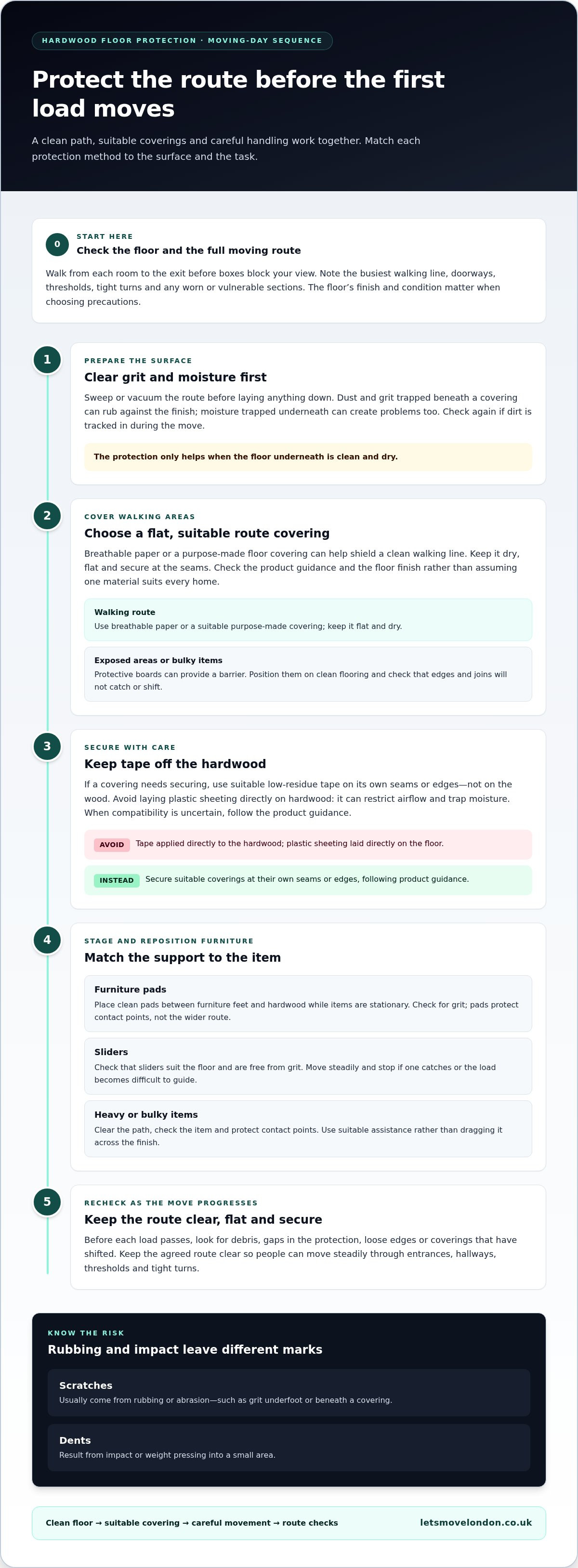
A simple checklist helps keep floor protection effective from the first box to the last piece of furniture. Set it up before activity starts, then check it as the route gets busier. For how to protect hardwood floors during a move, the order matters: clean first, cover second, and monitor throughout.
Before belongings leave the room
Walk the planned route and clear away loose objects. Sweep or vacuum the floor before placing any covering. Grit trapped underneath can rub against the finish as people walk over it, so don’t lay protection over dust, crumbs or other debris. If the floor is damp, let it dry before covering it.
Measure the route so coverings reach the areas people and belongings will actually pass over, including the entrance, hallway, turns and thresholds. Lay the material flat, then secure its edges and joins using a method suitable for the covering. Keep adhesive off the hardwood itself, and follow the covering manufacturer’s guidance for use on finished wood.
Clear the route and remove loose debris.
Check that the floor is clean and dry.
Measure the walking and carrying path, including turns and thresholds.
Place coverings where traffic will pass and secure them without taping directly to hardwood.
Keep a cloth or suitable cleaning tool available to deal with tracked-in dirt or moisture.
During loading and unloading
Wet-weather moves need extra attention at the entrance. Rain on footwear, damp outdoor items and muddy soles can bring moisture and grit indoors. Use an entrance mat to catch some of the dirt, keep wet umbrellas and outdoor items away from the protected route, and wipe up tracked-in moisture promptly. Don’t cover a wet patch and leave it beneath the protection.
Check the route during the move, especially after repeated trips between the entrance and the rooms. Look for shifted edges, bunching, exposed strips of floor or dirt caught beneath a covering. Pause traffic before correcting a problem. A quick inspection helps prevent a small gap or loose edge from becoming a trip hazard or allowing grit to spread.
Once loading and unloading are finished, lift coverings carefully rather than dragging them across the floor. Inspect the hardwood for debris, dampness or marks, and clean it as appropriate for its finish. A final check also helps you spot anything that needs attention before furniture is placed in the new arrangement.
Planning the route, access and timing together can make the protection checklist easier to follow. Use this London removals planning guide as a starting point for organising a smoother move.
Protect Hardwood Floors With an Organised London Moving Team
A clear plan helps prevent the rush and confusion that can lead to avoidable scrapes. When everyone knows which route to use, where bulky belongings need extra care and how to keep access clear, there’s less need for last-minute manoeuvring. That coordination matters in London homes where narrow hallways, shared entrances or tight turns can make carrying items more demanding.
What to expect from a careful removal process
Before moving begins, point out narrow access points, thresholds and any hardwood areas you’re particularly concerned about. Share the planned route and explain where you’ve laid coverings, so the team can work around them without blocking access or forcing awkward turns. Flag bulky or heavy belongings early, too. Clear communication supports careful handling and helps keep the move organised rather than rushed.
A professional team can help maintain a steady flow: keep the route clear, coordinate who carries and who guides, and avoid unnecessary stops or repositioning. No process can promise that a floor will remain mark-free, but considerate handling and a well-organised move can reduce avoidable risks. Let's Move London’s friendly, efficient team is dedicated to making moves hassle-free, with care taken when handling belongings.
Keep your own preparation in view as well. Make sure coverings are laid on a clean, dry floor, and show the team where edges or joins need attention. If an item needs to be turned or paused, agree on a clear place to do so rather than allowing it to be shifted repeatedly in a confined space. Small points of coordination can make a busy moving day feel more manageable.
Plan the move with Let’s Move London
Let's Move London provides house removals across London, Greater London and surrounding counties, as well as professional packing services. Planning access and the movement of larger belongings in advance gives the team useful context and helps you feel prepared. The company has been trusted by Londoners since 2013, and full insurance is included with every move.
Use the steps in this guide to prepare your route and share any access considerations as part of your moving plans. A calm, coordinated approach can help reduce rushed handling while keeping the day on track. For a London move, plan a smoother London move with Let's Move London.
Make Your Next Move Feel More Settled
Protecting hardwood doesn’t have to add another source of stress to moving day. A little forward planning can also prevent the second round of lifting that happens when furniture arrives and its final position hasn’t been decided. Before the move, sketch out where larger pieces will go and choose a clear spot for boxes, so belongings don’t need to be shifted repeatedly across the floor.
Keep that plan accessible on the day and share it with anyone helping. If a room becomes crowded, pause and make space rather than squeezing past stacks or turning furniture in a hurry. This small change supports how to protect hardwood floors during a move while helping you settle in with less last-minute rearranging.
For a more organised move in London, Greater London or the surrounding counties, Lets Move London can help you plan the next step. Plan a smoother London move, and look forward to getting comfortable in your new home.
Frequently Asked Questions
Can I put cardboard directly on hardwood floors during a move?
Cardboard may shield a route from light foot traffic, but it isn’t automatically suitable for every hardwood floor. Check that the floor is clean and dry, and follow the cardboard or covering manufacturer’s guidance. Keep the sheets flat so corners don’t curl underfoot, and secure joins without sticking adhesive to the wood. Replace any cardboard that becomes damp, dirty, torn or unstable, since damaged sheets can shift or trap debris.
Is painter's tape safe to use on hardwood floors?
Don’t assume painter’s tape is safe for hardwood. Its adhesive may interact differently with floors depending on the finish, age and condition, and residue or damage can be difficult to remove. Avoid applying tape directly to the wood, even for a short move. Instead, use a method recommended for the covering itself, such as securing its joins, and make sure the finished setup stays flat without adhesive bonding to the floor.
What happens if grit gets underneath a floor protector?
Grit beneath a protector can rub against the finish as people walk over it or belongings shift, causing scuffs. Stop traffic over the affected patch, then lift the covering carefully without dragging it. Remove the debris and inspect the floor and underside of the protector before replacing it. For example, if muddy footwear has crossed a runner, check the area near the entrance rather than assuming dirt stayed at the edge.
Do felt pads protect hardwood floors while moving furniture?
Felt pads can reduce direct contact between furniture feet and hardwood when a piece is standing still or being repositioned gently. They don’t make dragging a heavy item safe. Before using them, check that each pad is clean, intact and correctly placed beneath the feet. A loose or grit-covered pad may shift during movement. For a heavy piece, use a controlled lifting or moving method instead of relying on pads alone.
How can I protect hardwood floors when moving in wet weather?
Keep the entrance and route as dry as practical. Place a stable doormat by the door, wipe tracked-in moisture promptly and keep wet umbrellas or outdoor items off the hardwood. Check footwear and the underside of any coverings for mud or grit. Don’t cover a damp patch, since a covering may hold moisture against the floor. In rainy London conditions, repeat these checks as people move between the property and the vehicle.
Should I cover every hardwood floor before moving?
No, protection can be focused on the areas most exposed to traffic and handling. Consider the entrance, the path between rooms and the exit, and places where bulky items need to turn. Before choosing coverage, consider the floor’s finish, condition and the covering’s instructions. A targeted plan is often more practical than spreading unsuitable material throughout the home. That’s a useful starting point for how to protect hardwood floors during a move.

Comments