
Business Relocation in Westminster: Costs and Planning
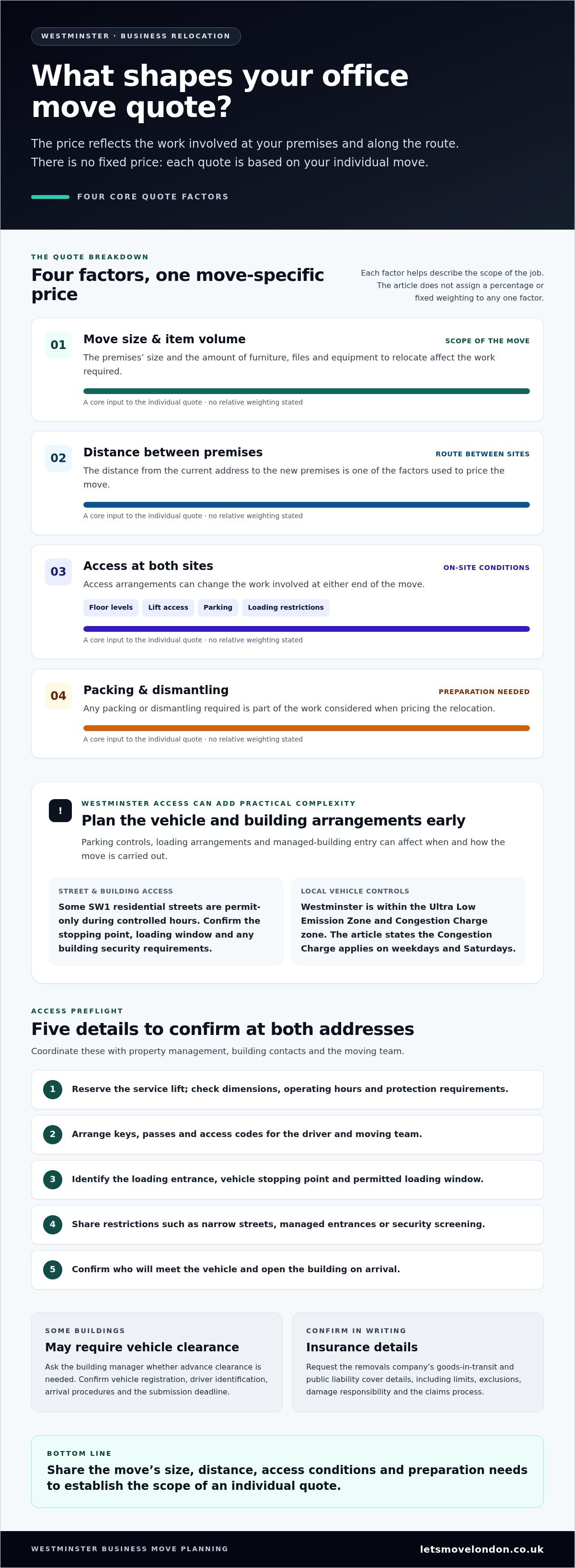
A business relocation in Westminster is priced according to the move’s size and volume, the distance between premises, access at both sites, and any packing or dismantling needed. Floor levels, lift access, parking and loading restrictions can also affect the work involved. The price is based on your individual move and is provided after you request a quote.
It’s understandable to focus on moving furniture and equipment, but the schedule and access arrangements can be just as important. In Westminster, some SW1 residential streets are permit-only during controlled hours, and the area lies within both the Ultra Low Emission Zone and the Congestion Charge zone. Planning vehicle access and loading in advance helps bring the practical details into view.
This guide explains who benefits from office relocation support, what to plan before moving day and which factors shape a commercial move quote. It also covers move-day coordination, from preparing staff and equipment to organising access, so you can build a clear plan for the transition.
Table of Contents
Do removal vehicles need security clearance to access buildings in Westminster?
Not every removal vehicle needs security clearance, but some government and institutional buildings in Westminster require advance clearance for commercial vehicles. Ask the building manager about vehicle registration details, driver identification, arrival procedures and the deadline for submitting them.
For any move, agree the loading point and access route with property management. Also request written details of the removals company’s goods-in-transit and public liability cover, including relevant limits, exclusions, responsibility for damage and the claims process.
To see how scheduling supports a well-organised office move, watch this practical guide:
Westminster access needs practical coordination. Most SW1 residential streets have permit-only parking during controlled hours, while central offices may sit within controlled parking areas. Confirm where the vehicle can stop, how loading access works and whether the building allocates a loading bay or a short collection window.
Westminster is within both the Greater London Ultra Low Emission Zone and the Congestion Charge zone. The Congestion Charge applies on weekdays and Saturdays. Factor these local controls into vehicle routing and the move schedule, then confirm the planned arrival time with the building contact.
Use this access checklist with the property manager at both addresses:
Reserve the service lift and confirm its dimensions, operating hours and protective requirements.
Arrange keys, passes and access codes for the driver and moving team.
Identify the loading entrance, vehicle stopping point and permitted loading window.
Share restrictions such as narrow streets, managed entrances or security screening.
Confirm who will meet the vehicle and open the building on arrival.
Church Street Market has a distinct legal context during regeneration. According to Legislation.gov.uk, traders’ licences and conditions remain governed by the City of Westminster Act 1999. Businesses near the market should factor in their site arrangements and any access instructions when planning deliveries or a move.
Central London disruptions can include congestion, restricted parking, narrow residential streets, controlled loading and managed-building entry. These can delay vehicle access or reduce the time available for moving items. Set a clear arrival plan and identify a contact who can resolve access problems.
Before moving day, share the access plan with staff, building management and the removals team. A brief site walk-through can clarify lift routes, door widths and staging areas. Assign a coordinator to resolve issues without holding up loading.
Who Uses Office Relocation Services in Westminster?
Westminster office moves suit organisations relocating, expanding into new premises or consolidating teams. A professional plan can coordinate furniture, files and equipment between locations, whether you occupy a managed office, retail unit or another commercial space.
Prepare IT equipment before it leaves the office. Inventory computers, monitors, servers, network devices and peripherals, then assign each item to its destination room or workstation. Back up important data before equipment is disconnected, and arrange shutdown and reconnection with the staff responsible for your systems.
Confidential documents need a separate handling plan. Secure sensitive files before packing, and label archive boxes and filing cabinets clearly. Limit access to authorised staff and distinguish confidential records from general office supplies. A named internal coordinator can track the transfer and resolve questions about ownership or destination.
Use a practical preparation sequence for staff, files and premises:
Separate items staying at the current premises from those moving.
Label boxes by department, room or desk number, with priority equipment marked clearly.
Tell staff their move-day responsibilities and when to prepare workstations.
Record fragile, heavy or sensitive assets, including artwork, display items and branded materials.
Share destination layouts so furniture and equipment reach the right spaces.
Retail businesses may need stock, shelving and display furniture moved together. Professional offices may prioritise secure filing cabinets, archive boxes and IT equipment. For each type of premises, a clear inventory helps match packing and transport arrangements to the assets involved.
Before packing, note equipment condition and identify cables or components that belong together. Use consistent labels on boxes, desks and devices. At the new location, check each item against the inventory and place it in its assigned room. This makes handover more orderly and helps staff find essential tools.
Westminster City Council’s Economic Growth team can connect businesses moving into Westminster with relevant opportunities, spaces and partners. For tax planning, ask your accountant to review business rates, lease costs and the treatment of relocation expenses before committing to new premises.
For a move involving several departments, appoint one coordinator to manage staff updates, inventory questions and destination priorities. Explore office relocation planning guidance as you prepare your move checklist.
Office move planning and scheduling
A workable schedule connects building access, staff responsibilities, packing, transport and reopening tasks. In Westminster, confirm the move date and access times with both building managers before setting deadlines.
Move Preparation Checklist
Start with a room-by-room inventory, marking what is moving, staying or being removed. Assign an internal coordinator to track decisions, staff updates and outstanding tasks. Confirm building rules, lift bookings and access permissions with each property manager. Set a deadline for staff to identify equipment, files and furniture needing special handling.
Tell teams which items they must prepare themselves and which are part of the move plan. Keep keys, passes and access codes ready for the people responsible for opening each premises.
Scheduling the Office Move
Build the schedule around the confirmed move date, building access times and order of work. Ask property managers to confirm lift availability and loading windows. Then sequence packing, collection, transport and placement so the receiving team knows when each department’s items should arrive.
Share the timetable with staff and building contacts. Office relocations can be scheduled for evenings or weekends, depending on the agreed access period and your operational priorities.
Packing and Labelling Office Contents
Use consistent labels for departments, rooms, desk numbers and priority equipment. Mark boxes containing files or specialist items clearly, and keep confidential documents secure before packing begins. Separate cables and peripherals from general supplies, then identify which devices require planned IT shutdown and reconnection.
Set aside essential items for the first working day. Include what teams need to restart tasks, such as key files, basic stationery and designated equipment.
Relocating Different Business Premises
Office moves centre on workstations, files and IT equipment. Retail relocations may involve stock, shelving and display furniture, while hospitality premises may need a plan for furniture, supplies and service equipment. List assets by area and arrange delivery around how each space will reopen.
For a business moving between Westminster locations, align the inventory with the new floor plan. Identify items that cannot be placed immediately, such as furniture awaiting room preparation or equipment awaiting reconnection.
Plan for any gap between leaving the current premises and entering the new site. Storage can hold furniture, archives or other assets until they are ready for delivery. Keep stored items on the same inventory, with their intended destination and release priority. This lets the coordinator connect the schedule to the later setup.
Factors affecting relocation costs
For a business relocation in Westminster, the quote depends on the move’s scope and conditions at both premises. The price is based on your individual move and provided after you request a quote. Key factors include distance, office size, item volume, packing needs, site access and scheduling.
Start with an inventory. A compact office with a few desks needs a different plan from premises with extensive furniture, archives, display items and IT equipment. Volume affects packing, labour and transport. List items by room and flag fragile, heavy or sensitive assets that need careful handling.
The building layout affects how items are moved. Record the floor levels at both addresses and whether lifts are available. Stairs, narrow corridors or restricted lift access can change the route between rooms and the vehicle. Share floor plans, measurements and photographs to show access routes and the destination layout.
Westminster parking, loading access and managed-building rules can affect the work. A vehicle may need to use a controlled loading area or fit within a short collection window. Restricted access, narrow streets and congestion can affect the schedule and time spent moving items between the vehicle and premises. Include these details in the move brief.
Distance: Provide both addresses and identify any planned stops.
Packing: State whether packing materials, packing labour or both are needed.
Furniture work: Identify desks or workstations requiring dismantling or reassembly.
Specialist handling: Flag fragile, heavy or sensitive equipment, artwork and display items.
Timing: Share preferred dates and any evening, weekend or out-of-hours requirements.
Scheduling can affect the resources required. A strict move window, limited loading access or business downtime constraints may shape the plan. Explain which departments must be operational first and whether equipment needs coordinated shutdown or reconnection. These priorities help define the work sequence and time available at each stage.
Prepare a concise quote brief with measurements, photographs, inventory details, access information, preferred timing and project priorities. Note lift availability, floor levels, parking arrangements and building rules at both locations. For a business relocation in Westminster, these details help Let's Move London assess the site conditions and define the work involved.
Compare quotes by reviewing the included work, preparation, estimated timescales and communication, not price alone. Check that each proposal reflects the same inventory and access details. If one includes packing and another does not, they cover different scopes. Clarify what each proposal includes so your comparison reflects the service your business needs.
Commercial moving services and move-day coordination
A coordinated commercial move links the agreed scope with the sequence of work on site. For central Westminster organisations, that means assigning clear responsibilities for collection, transport, access and placement at the new premises.
Start with a move coordinator who can make decisions and share updates. Give them the inventory, floor plans, contact details for both buildings and the moving schedule. They can answer questions about destinations, flag urgent equipment and keep staff informed if the sequence changes.
Before the team arrives, confirm the loading point, building entry procedure and access times with property contacts. The person meeting the vehicle should have keys, passes and access codes ready. Keep a working phone contact available between the old and new premises, especially if access instructions change or a delivery needs redirecting.
Use a clear sequence for move-day tasks:
Walk through the rooms and identify items ready for collection.
Check labels against the department, room or desk destination.
Prioritise essential equipment and items needed to reopen first.
Direct each load to its planned destination as it arrives.
Record outstanding items before the moving team leaves each site.
Clear labels help the team place boxes, furniture and equipment correctly without relying on staff to identify every item. Use the same room names on the inventory and destination plan. Mark priority items, and keep specialist equipment with its related components for careful handling.
Commercial moves can involve offices, retail units, warehouses and other premises. A retail relocation may need stock and display furniture placed before back-room supplies. An office may prioritise workstations and IT equipment. Set the delivery order around the activities each organisation needs to resume, rather than unloading everything into one holding area.
Build flexibility into the timetable while keeping responsibilities clear. Westminster office moves can be arranged for evenings or weekends, depending on the move plan. Confirm the approved access period, lift arrangements and loading order with building contacts. If a stage runs late, the coordinator should know which tasks can move and which affect reopening.
At the destination, use a floor plan to guide placement and keep routes clear during unloading. The coordinator can check rooms against labels, identify missing or misplaced items and record follow-up actions. This handover gives staff a usable workspace instead of a collection of unassigned boxes.
Prepare your move-day sequence and plan your commercial move around the access, handling and placement needs of your organisation.
Let's Move London: Moving
Lets Move London helps organise business moves in Westminster, including the relocation of furniture, equipment and other workplace contents. Share your inventory, site access details and preferred timing to outline the scope of your move.
If the new premises are smaller or there’s a gap between leaving one site and entering another, storage can help manage items that aren’t ready for delivery. A man and van service can suit a move with a smaller load.
For a clear next step, contact Let's Move London to discuss your move requirements, or visit letsmovelondon.co.uk.
Set Your Westminster Move in Motion
A successful business relocation in Westminster starts with a clear decision about what your organisation needs next. Set priorities, identify who will coordinate the transition and turn the plan into practical actions your team can follow. A defined next step keeps decisions moving and gives staff a clear point of contact.
Lets Move London provides moving, storage and man and van services for businesses changing premises. Storage can help when the new workspace isn’t ready for every item, while a man and van service can suit a smaller load. Choose support that matches the scale and practical needs of your move.
Start a conversation about your requirements and the arrangements you’re planning. Contact Let's Move London to discuss your business move and take the next step with a clear plan.
With clear priorities and a practical plan, your team can approach its next chapter with confidence.
Frequently Asked Questions
How can I find a reliable office removal company with a proven track record?
Look for clear evidence of relevant office-moving experience, defined handling procedures and insurance included with every move. Review customer feedback for details about communication, care and completing agreed work. A written scope should explain what is moving and how the transition is organised. Check that the plan accounts for IT equipment and confidential files, not only desks and boxes.
How do professional office relocation teams safely move computers, servers, and fragile equipment?
Prepare equipment for transport, keep related cables and components together, and label each item for its destination. Back up important data before disconnecting computers, and arrange IT shutdown and reconnection with the responsible staff. Identify fragile or sensitive items separately from standard office contents. Record a server cabinet’s location and destination so the receiving team can place it correctly.
Is Westminster inside the ULEZ and the Congestion Charge zone?
Yes. Westminster is within both the Greater London Ultra Low Emission Zone and the Congestion Charge zone. The Congestion Charge applies in Westminster on weekdays and Saturdays. If a move involves a commercial vehicle, include both zones in route and schedule planning. Also consider loading arrangements and building access, as these affect how the move is organised at each address.
Moving from Westminster?
If your business is moving out of Westminster, align the departure plan with the receiving premises. Set out which teams or assets must be ready first, and identify items that cannot go directly into the new space. Storage can bridge a gap between properties or accommodate furniture when the destination has less room. Track each item through to its planned destination in your inventory.
Need Office Commercial Removals Quotes in City Of Westminster?
Prepare a concise move brief before requesting a quote. Include the addresses, an inventory, photographs or measurements, floor and lift details, loading arrangements and preferred timing. Note equipment needing careful handling and any strict operational priorities. These details describe the work at both premises and make it easier to compare proposals by included tasks and estimated schedule.
What affects the cost of an office relocation?
The cost depends on the move’s scope and site conditions. Key considerations include the amount of furniture and equipment, distance between premises, packing or dismantling needs, floor access, lifts, loading arrangements and timing. Specialist handling or a short access window can also change the work involved. Provide a consistent inventory and access description so quotes reflect comparable requirements.
Which business relocation companies serve Westminster, London?
Lets Move London provides commercial moving services in London, including business relocations. The service suits organisations transferring office contents, equipment and furniture. Storage can help when a new workspace isn’t ready for every item, while man and van can suit a smaller load. Match the service to the scale and practical requirements of your move.
How much does a business move in Westminster typically cost?
There is no single price for every Westminster business move. The price depends on the individual move and is provided after you request a quote. Key factors include item volume, distance, packing or dismantling needs, access at both properties and scheduling. Provide an accurate inventory and site details to receive a quote based on the work involved.



Comments