
Choosing a Commercial Relocation Company in London
A business move is more than shifting desks from one address to another. A suitable commercial relocation company in London can manage office moves and specialist environments, with planning shaped around the equipment, records and working needs involved. The right approach helps limit disruption while keeping the move organised.
A well-planned relocation protects day-to-day operations as well as physical assets. Specialist settings may need particular handling arrangements, so the plan should identify what is moving, how it will be handled and when each part of the new space needs to be ready.
This guide explains the difference between commercial removals and a full office relocation, what to consider when choosing a mover, and how planning can support business continuity. It also covers practical needs in public and private sector organisations, including moves involving specialist environments.
Table of Contents
Do you handle both commercial removals and full office relocation?
Yes. Commercial removals move business belongings, while a full office relocation also coordinates the move around workplace layout and operations. Both need a clear plan for people, furniture, equipment and transport.
Relocation Planning and Project Management
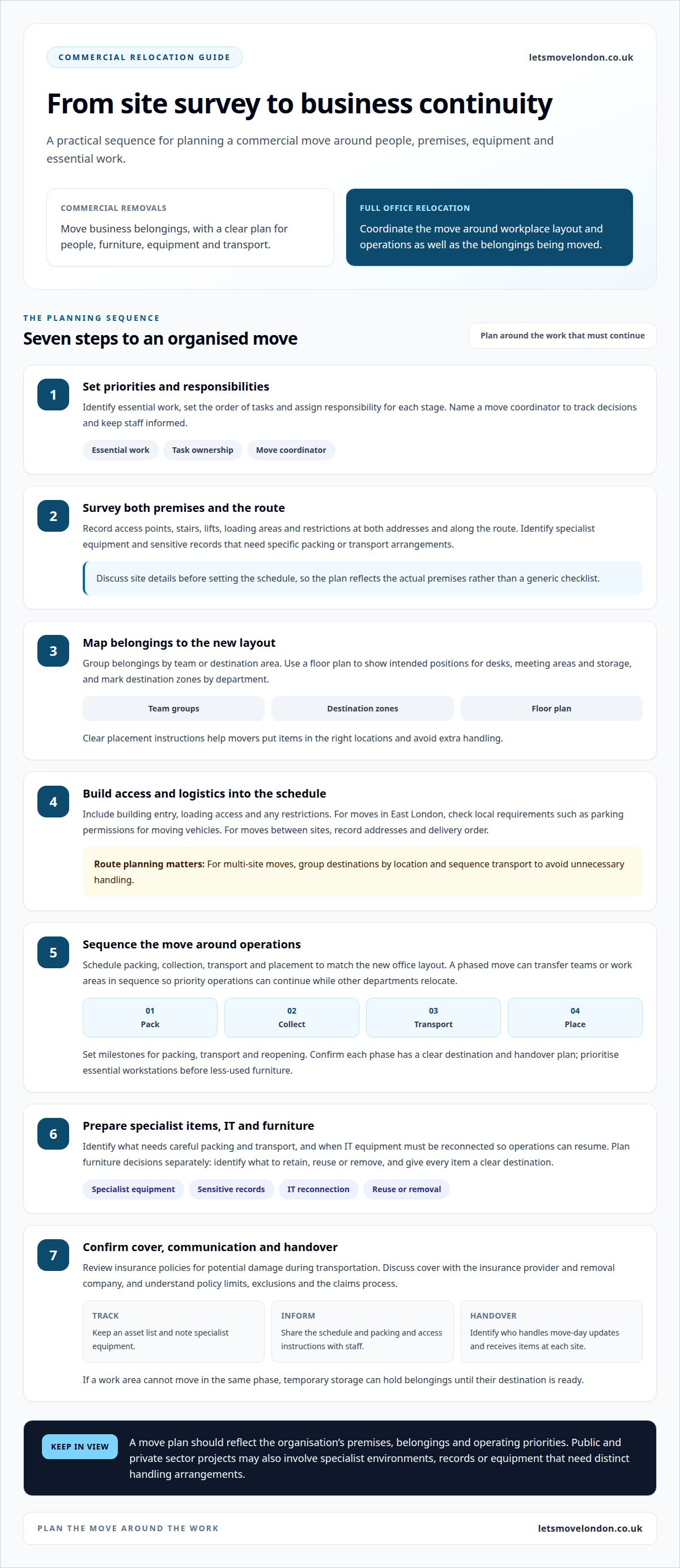
A project plan sets the order of work, identifies priorities and assigns responsibility for each stage. Group belongings by team or destination area, then schedule packing, collection, transport and placement to match the new office layout. For example, prioritise essential workstations for setup before less-used furniture. A named move coordinator can track decisions and keep staff informed.
Site Surveys and Bespoke Plans
A site survey considers both addresses, the belongings to be moved and the route between them. Record access points, stairs, lifts, loading areas and any restrictions that affect handling. Identify specialist equipment or sensitive records that need a specific packing and transport approach. Discuss these details before setting the schedule, so the plan reflects the actual premises rather than a generic checklist.
Workplace redesign and space planning determine where office furniture goes at the destination. A floor plan can show the intended positions of desks, meeting areas and storage, helping movers place items correctly and avoid extra handling. Marking destination zones by department gives the team a useful reference during unloading.
For moves in East London, plan access around the specific streets and buildings on the route. Check local requirements for any permits, such as parking permissions for moving vehicles. Include loading access and building entry in the schedule, then organise move stages around the business’s operating priorities.
Packing and reconnecting IT equipment are separate relocation tasks. Identify what needs careful packing and transport, and when equipment must be reconnected so operations can resume.
Sustainable packing and furniture disposal require separate planning. Before the move, identify reusable packing materials and decide which furniture to retain, reuse or remove, so every item has a clear destination.
How do you protect business continuity during a move?
Continuity planning starts with identifying the work that must continue during the move. A phased schedule, clear staff communication and careful handling of business belongings can help keep disruption manageable.
Phased Moves and Business Continuity
A phased move transfers teams or work areas in sequence instead of moving everything at once. This can keep priority operations running while other departments relocate, provided each phase has a clear destination and handover plan. For example, move a support team after confirming its workstations and essential equipment are ready. Set milestones for packing, transport and reopening, and promptly share changes with affected staff.
Business size affects the plan, but not the need for coordination. A small office may move its core equipment and furniture together, while a larger organisation may need separate schedules for departments, shared spaces and records. For North London removals, plan the route and access alongside the move sequence. First identify essential functions, items needing careful handling and when each team can work from the new premises.
Insurance and Liability Cover
Review your insurance policies for cover against potential damage to assets during transportation. Discuss the move with your insurance provider and removal company to clarify how the cover applies to the items being relocated. Keep an asset list, note any specialist equipment, and understand the relevant policy limits, exclusions and claims process before the move begins.
Communication supports a smoother transition. Share the agreed schedule with staff, identify who handles move-day updates, and give teams practical instructions for packing and access. If a work area cannot move in the same phase as the rest, temporary storage can help separate items until their destination is ready. Explore storage for a staged business move when timing requires belongings to be held between locations.
Commercial moves for public and private sector companies
Public bodies and private firms both need a move plan shaped around their premises, belongings and operating priorities. Healthcare, education and industrial settings bring specialist handling considerations that differ from a standard office move.
Evening, Weekend and Out-of-Hours Moves
An evening or weekend move can reduce overlap with normal working hours, but still needs detailed coordination. Set the sequence for packing, transport, access and reopening, then communicate each stage to staff and building contacts. For an out-of-hours office move, include access arrangements and identify who will receive furniture or equipment. Make the schedule fit operational needs, not just the preferred moving time.
London, M25 and South East Coverage
A move between London premises, across the M25 or into the South East requires route and destination planning. Record both addresses, access points, loading arrangements and the order for delivering items. For a multi-site office move, group destinations by location and sequence transport to avoid unnecessary handling. Confirm how specialist assets should be protected throughout the journey and who receives them at each site.
Public sector projects may involve records, collections or equipment that need careful tracking. The Bodleian Library move listing describes a collection of 150,000 linear metres and 1 million maps, illustrating the scale and categorisation involved in specialist relocation. A collection plan can identify item groups, destination areas and handling priorities before transport begins.
Healthcare, education and industrial moves each need different preparation. A healthcare site may need equipment placed in designated rooms; a school move may involve classroom furniture and learning resources; an industrial relocation may include bulky machinery. Clear item details and destination instructions help movers handle each move efficiently.
For any public or private organisation, define the move’s goals first: protect sensitive belongings, maintain essential services or reopen specific work areas promptly. A Northamptonshire Archaeological Resource Centre archive move took two weeks, showing how specialist handling and collection needs can shape a relocation schedule. Set milestones around the work rather than assuming every office move follows the same timeline.
Choosing a commercial moving company
Choose a mover whose planning suits your premises, belongings and operating needs. When selecting a commercial relocation company in London, look for a clear process, good communication and relevant experience.
Reviews and Company Reputation
There is no single way to identify the best-reviewed London mover without specifying a platform and date. Read reviews for recurring details about punctuality, packing, communication and how teams handled problems. A detailed account of an office move can reveal more than a rating alone. Look for examples involving similar facilities, specialist equipment or phased relocations, rather than relying only on general comments.
A mover’s reputation should match the work required. A business moving offices across London may need inventory control and careful handling, while a smaller organisation may prioritise a straightforward schedule. Look for reviews that describe the service and outcome, not just whether the customer felt satisfied.
Risks When Selecting a Relocation Company
Key risks include missed schedule details, unclear responsibility for belongings, damage during handling and poor communication between teams. Overlooking building access or destination arrangements can cause delays on move day. Reduce these risks by recording the inventory, sequence, access details and named points of contact in the written move plan.
Check that the proposed packing and transport approach suits the items involved. Fragile equipment and standard office furniture, for example, need different handling instructions. An incomplete inventory makes it harder to track belongings between collection and delivery. Make sure the scope identifies the areas, belongings and facilities included, and explains how changes will be recorded.
Use these practical checks when comparing a proposal:
Match the stated scope to every department and destination.
Check that the timeline includes packing, transport and placement.
Confirm how staff receive updates and report an issue.
Review how the inventory identifies items and delivery areas.
A clear written plan makes expectations easier to manage. Plan your commercial move around your premises and operating priorities.
Let's Move London
Let's Move London helps organisations plan commercial moves around their premises, belongings and operational priorities. Turn to the team when preparing an office relocation, moving belongings between sites or arranging storage to support the schedule.
Discussing your locations, inventory and preferred timings helps shape a practical moving plan. If teams or work areas need to relocate in stages, storage can hold belongings until they are ready for delivery. The right arrangement depends on what needs moving and how your business operates.
For a London business move, share the key details and discuss the support you need. Contact Let's Move London to talk through your relocation.
Set the next move in motion
Turn your organisation’s priorities into a workable relocation brief. Decide which teams, equipment and facilities need to move first, and identify operational requirements that should shape the schedule. This gives your moving team a clear basis for planning and coordinating the work.
A commercial relocation company in London should fit your business’s practical needs, rather than force the move into a standard plan. Consider how the proposed approach accommodates your premises, belongings and preferred timings. A focused conversation can establish the scope and identify suitable support for your relocation.
Let's Move London offers moving, storage and man and van services. Share the key details of your business move and discuss the support you need. Contact Let's Move London to start planning your relocation with a clear next step.
Frequently Asked Questions
Can you move specialist environments as well as offices?
Yes, commercial relocations can include offices and specialist environments. The practical approach depends on the items, access and destination requirements. For example, a teaching space may need classroom furniture grouped by room, while a workshop may contain equipment requiring clear handling instructions. Identify unusual or sensitive items early so the plan covers their packing, transport and placement at the new premises.
What areas do you cover?
Let's Move London serves all London boroughs, Greater London and surrounding counties. A move may involve a change of address within London or a journey between the capital and a nearby county. The destination and route shape practical arrangements, including how belongings are grouped for delivery. Share both addresses and any access details when discussing your move, so the arrangements suit the locations involved.
What services do commercial relocation companies in London provide?
Commercial movers can support office removals, professional packing and storage, with the scope shaped around the business move. The work may involve desks, furniture, equipment and records, while storage can hold belongings between premises. Man and van support can suit a smaller load or limited transport task. Set out what needs moving and where each group of belongings should go.
How do London office relocation companies compare on price and services?
Compare the written scope, not just the headline price. Commercial relocation quotes may cover different combinations of moving, packing and storage, so check that each proposal includes the same belongings and destinations. Let's Move London provides a quote based on the project requirements. The volume of belongings, distance and requested support inform the assessment.
How far in advance should a business book an office move in London?
Start planning as soon as the move date or premises handover becomes clear. The time needed depends on the inventory, access arrangements, packing requirements and whether teams will move in stages. A larger office or a move involving storage needs more coordination than a small, single-site transfer. Early planning gives the business time to organise staff communication and confirm destination details.
What is the process for planning and carrying out a commercial move in London?
Start by defining the locations, inventory and operational priorities. Agree on the move scope and sequence, then organise packing and transport around the belongings and destination. On move day, group items by department or room to support accurate placement. After delivery, use the inventory to account for each group and identify anything needing attention before teams resume work.



Comments