
Getting a VAT receipt for removal services and reclaiming VAT
An original paper receipt isn’t always the only evidence available, but proof of payment alone isn’t enough to reclaim VAT on a removal. A VAT-registered business should normally keep a valid VAT invoice. If it can’t obtain one, HMRC may consider alternative evidence, such as a supplier statement. Getting a VAT receipt for removal services helps show what was supplied, what VAT was charged and how the move related to the business.
It’s understandable to want clear paperwork before reclaiming VAT. The invoice details matter, as does evidence that the service was used for business purposes rather than personal reasons.
This guide explains what a VAT receipt for removal services should show, what supporting records can help if an invoice is missing and how VAT applies to domestic moves in the UK. You’ll also learn when a business can reclaim VAT and what records to keep.
Table of Contents
What happens if my VAT receipt is missing information?
A missing detail can make a VAT claim harder to support. Identify what’s missing, then request an amended invoice or gather other evidence linking the transaction to the supplier and your business.
Required VAT invoice details
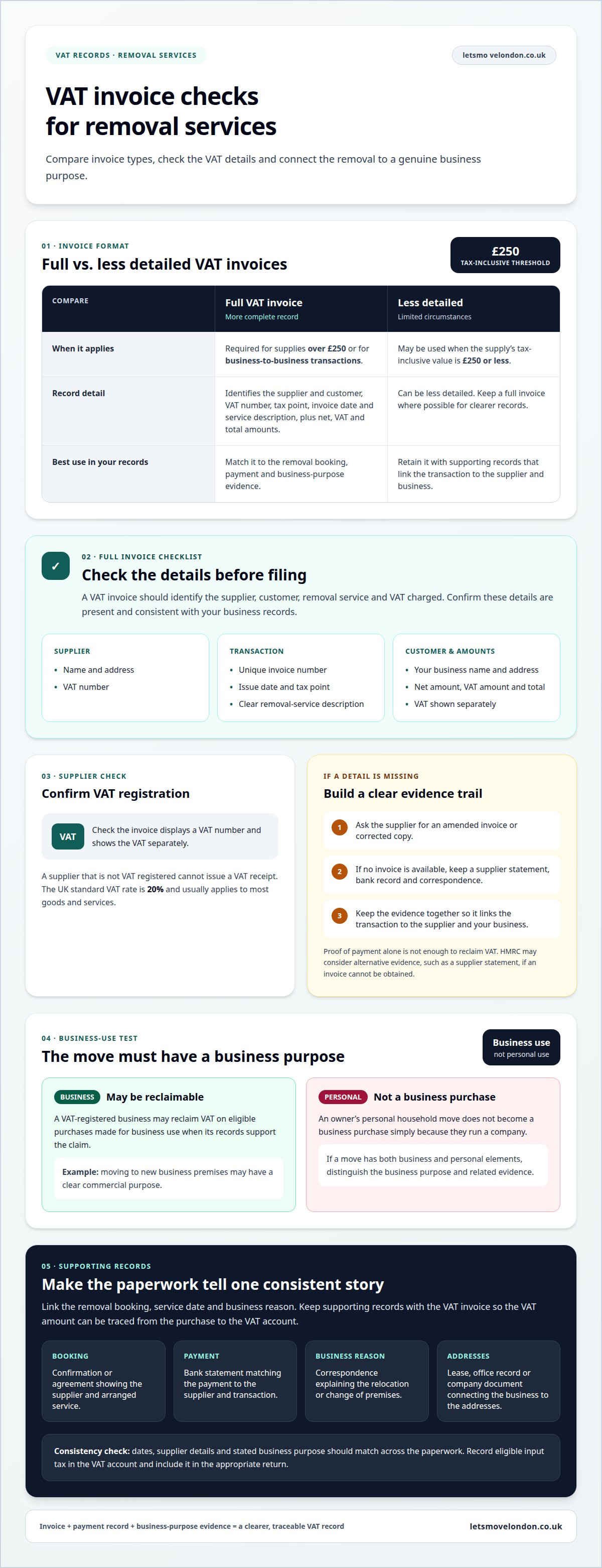
A VAT invoice records the supplier, customer, removal service and VAT charged. Check that it includes a unique invoice number, issue date, tax point, seller’s name, address and VAT number, your business name and address, and a clear service description. It should also show the net amount, VAT amount and total. Accurate details connect the transaction to your business records and support a reclaim.
Full and less detailed invoices
A full VAT invoice is required for supplies over £250 or for business-to-business transactions. It includes the supplier and customer details, VAT number, tax point, invoice date and service description, plus the net, VAT and total amounts. A less detailed invoice may be used for a supply with a tax-inclusive value of £250 or less. Keep the full invoice where possible, as it gives your records clearer detail.
Checking removal company VAT registration
VAT registration means the supplier is registered to charge VAT on taxable supplies. Check that the invoice displays a VAT number and that VAT is shown separately. A supplier that isn’t VAT registered cannot issue a VAT receipt. In the UK, the standard VAT rate is currently 20% and usually applies to most goods and services, according to HM Revenue & Customs. This helps you assess whether the invoice supports the amount charged.
Can a removal company issue a VAT receipt after the move? Yes. Request an invoice showing the service and transaction details, then keep it with your payment records.
What if the company refuses? Ask in writing for a VAT invoice or corrected copy. If no invoice is available, keep supplier statements, bank records and correspondence as alternative evidence. HMRC should properly consider other evidence, such as supplier statements, when a business cannot obtain an invoice.
VAT receipts and reclaiming VAT
Reclaiming VAT means recovering eligible input tax through a VAT return. For removal costs, getting a VAT receipt for removal services gives the business a record to match against its accounts and the service received.
Paperwork for reclaiming VAT
Keep the invoice with records that identify the purchase and show where it sits in the business accounts. A booking confirmation can link the supplier to the agreed work, while a payment record shows the transaction was paid. Together, these documents help distinguish a business expense from personal spending. Use consistent supplier and transaction details throughout the paperwork to avoid confusion when preparing the return.
VAT evidence for input tax
Input tax is VAT incurred by a business on eligible purchases. A valid VAT invoice is the usual evidence, but a supplier statement or bank record can help explain a transaction if the invoice is unavailable. Keep supporting documents that show the purchase took place and had a business purpose. The records should form a clear trail, connecting the VAT amount to the service.
Reclaiming VAT on purchases
A VAT-registered business can reclaim VAT on eligible goods and services purchased for business use, not personal use. For example, a move to new business premises may have a clear commercial purpose. By contrast, an owner’s personal household move does not become a business purchase simply because they run a company. The business receiving the supply is generally entitled to reclaim its VAT, even if an employee’s details appear on the invoice.
Record eligible input tax in the VAT account and include it in the appropriate return. Getting a VAT receipt for removal services helps link the supplier’s charge to the business transaction, while clear accounting records show how the amount was treated. Keep invoices and supporting evidence together so the claim can be traced from the purchase to the VAT account.
Evidence that services were used by the business
A VAT claim needs to link the removal service to the business, not just prove that payment was made. A VAT-registered business must show that VAT was charged and paid and that the service was used for business purposes. For example, business records can establish the commercial context of a move from one trading address to another.
Create a paper or digital record linking the removal booking, service date and business reason. Useful supporting documents can include:
The booking confirmation or agreement, showing the supplier and service arranged.
A bank statement matching the payment to the supplier and transaction.
Business correspondence explaining the relocation or change of premises.
A lease, office record or company document connecting the business to the addresses involved.
Each document adds context. A bank entry may show that money left the account, while a lease or relocation email can explain why the business needed the service. Keep these records with the VAT invoice so they present a consistent account. Dates, supplier details and the stated business purpose should match across the paperwork.
Can I reclaim VAT on removal costs as a business? A VAT-registered business may reclaim VAT when the service was purchased for business use and its records support the claim. A move solely for an owner’s or employee’s personal home is personal expenditure, not a business purchase. If a relocation has both business and personal elements, distinguish the business purpose and related evidence rather than treating the entire move as business use.
Record the transaction in the business’s VAT account and keep supporting documents with the relevant return. Digital copies can make records easier to organise, provided they remain readable and linked to the invoice and payment. For example, group the supplier invoice, booking details, payment record and premises correspondence under the same move reference. This creates a traceable route from the service received to the business purpose claimed.
How can I request a VAT receipt from a removal company?
Make your request clear and include the details needed to identify the move. Send it to the company handling the booking, whether you request the invoice before or after the service. A VAT-registered supplier must provide a VAT invoice for a taxable supply to another VAT-registered business. A specific request helps distinguish a VAT invoice from basic proof of payment.
Include these details in your message:
Your business’s correct legal name and address for the invoice.
The booking reference, service date and removal addresses.
A request for a VAT invoice showing the service, VAT number and VAT charged.
The email address where the supplier should send the document.
When the invoice arrives, compare it with your booking. Check that the customer details match your business records and that the service description reflects the agreed move. If anything is wrong, explain the correction and request an amended invoice. Keep both the original and corrected versions with the booking and payment records.
If you received only proof of payment, explain that your business needs a VAT invoice for its records. Include the transaction date and supplier name so the company can locate the account. If the move has already happened, provide the same details and request an invoice for the completed service. Keep your written request and the supplier’s reply with the transaction paperwork.
If the company declines, ask whether it is VAT registered and whether VAT was charged. A supplier that isn’t VAT registered cannot issue a VAT receipt. If VAT was charged, request an invoice identifying the supplier and recording the amount. Keep any available statements and correspondence to support your records if you cannot obtain an invoice.
For help planning the practical side of a business relocation, explore this business moving guidance.
Let's Move London: Moving
Let's Move London helps organise residential and commercial moves, with storage available when a gap between properties affects your plans. If you’re planning a business relocation in London, its moving service can help with the move itself. Keep your VAT paperwork and evidence of business use organised separately.
Clear planning can make a demanding transition easier to manage. Share the scope of your move and consider whether storage could help bridge the changeover. For help with your move in London, contact Let's Move London or visit letsmovelondon.co.uk.
Make your next move easier to organise
Good move planning covers both practical arrangements and the business administration that follows. Organise relocation paperwork alongside decisions about dates, access and the sequence of the move. This keeps operational tasks visible and prevents tax records from becoming an afterthought.
If you’re planning a business relocation in London, treat getting a VAT receipt for removal services as one part of an organised move. Keep the admin clear and give the physical transition the same care. Let's Move London can help with moving arrangements, storage or a man and van service, depending on your needs.
Contact Let's Move London to discuss your upcoming move. Take the next step with a clear plan and a calmer transition.
Frequently Asked Questions
Do You Need Original Paper VAT Receipts to Claim Back VAT?
No. An original paper receipt isn’t always the only possible evidence. A VAT invoice is the usual record, but if it can’t be obtained, HMRC should properly consider other evidence, such as a supplier statement. Keep a bank statement or other supporting paperwork with it to help show that the transaction took place and related to the business. Proof of payment alone doesn’t establish the VAT charged.
What is a VAT Receipt?
A VAT receipt records a taxable purchase and shows the VAT charged by a VAT-registered supplier. It helps distinguish the tax element from proof that money changed hands. For example, a bank transaction may confirm payment to a removal firm, while the VAT receipt records the service and tax. A supplier that isn’t VAT registered can’t issue a VAT receipt.
Do UK removal companies charge VAT on removal services?
Only a VAT-registered removal firm charges VAT on a taxable UK domestic move. A firm that isn’t VAT registered cannot add VAT or issue a VAT receipt. This distinction matters when reviewing a quote: any VAT amount should relate to a supplier registered to charge it. Check the invoice’s VAT number and compare the tax amount with the total before recording the purchase.
What is the current UK VAT rate for removal services?
The standard VAT rate is currently 20%, according to HM Revenue & Customs, and a VAT-registered removal firm providing a move within the UK charges that rate. For example, an invoice should show the VAT separately from the net service charge, so the total can be understood. The rate applies to the domestic removal service, not simply because a customer requests a receipt.
What details must a valid UK VAT invoice include?
A full VAT invoice should identify the supplier and customer, describe the service and show the VAT charged. Check for the seller’s name, address and VAT number, your business name and address, a unique invoice number, issue date and tax point. It should also show the net amount, VAT amount and total for each item. Match these details to the transaction before filing the invoice.
Are domestic or international removals treated differently for VAT?
A VAT-registered removal firm generally charges 20% VAT for a move within the UK. Qualifying international goods transport may be zero-rated when the relevant export or import evidence is held.


Comments