
How to Move a Home Gym with Weights in London
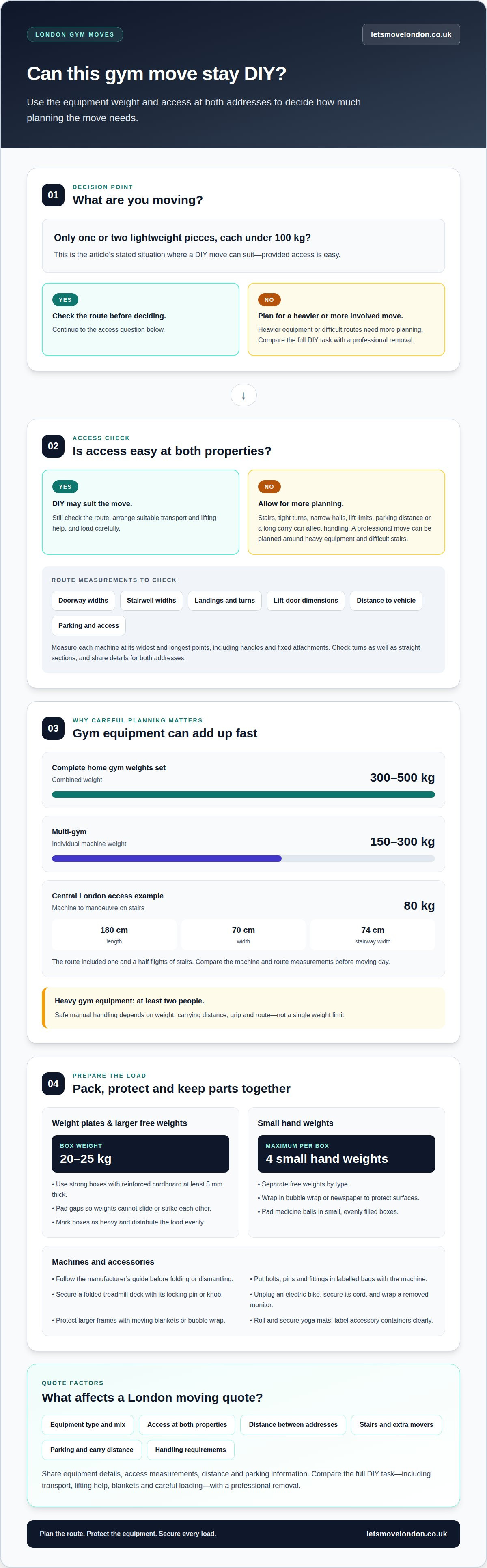
Heavy gym equipment needs a planned, team lift: in London, move it with at least two people. Moving a home gym with weights in London also means preparing each machine according to its manufacturer’s instructions, protecting loose parts and securing the load for transport. A complete set of home gym weights can weigh 300-500 kg, so treating it like ordinary household furniture can create avoidable risks.
It’s understandable to worry about stairs, narrow hallways, heavy plates and whether your equipment will be ready to use at the new address. The right approach depends on what you’re moving and the access at both properties. Treadmills, cross-trainers and multi-gyms may need folding or dismantling, while weights need careful packing to stop them shifting.
This guide explains how to prepare gym equipment for a move, how disassembly fits into the process and what affects a London removal quote. It also covers the differences between home and commercial relocations, whether you’re moving a few pieces from a spare room or a larger gym setup between sites.
Table of Contents
What does gym equipment removals include?
Protect floors, stair edges and walls with suitable coverings before moving heavy weights. Plan the route in advance and use team lifting for bulky or awkward items.
Assess Equipment Weight and Crew NeedsList each piece of fitness equipment and note its weight, dimensions and detachable parts. A complete set of home gym weights can weigh 300-500 kg; a multi-gym may weigh 150-300 kg. Heavy gym equipment should be moved by at least two people. Assess the grip, carrying distance and route as well as the weight, since each affects how the move can be handled.
Prepare and Label EquipmentPrepare each machine according to its manufacturer’s guide, then put removed parts and fasteners in labelled bags. Share the make and model of a treadmill with your removal team. Fold or partly dismantle it only if the manufacturer’s instructions allow, and secure the folded deck with its locking pin or knob. Wrap larger items that cannot be dismantled in moving blankets or bubble wrap to protect them during loading.
Protect Floors, Stairs and WallsCover floors and stair edges, and clear the route before moving weights. Place cardboard, towels or furniture sliders beneath a stationary bike to help prevent scratches. Wrap bulky frames in moving blankets and guide equipment carefully through doorways to avoid striking walls. Photograph any existing marks before the move as a record of the equipment’s condition.
Plan Tight Access and Stair MovesMeasure the machine and its route, including doorways, landings, turns and lift openings. In a Central London example, an 80 kg machine measuring 180 cm by 70 cm had to pass up one and a half flights of stairs, with a stairway only 74 cm wide. Compare measurements before moving day. If a treadmill or multi-gym cannot turn safely, dismantling may make the route manageable.
Do you disassemble and reassemble gym equipment?
Check the manufacturer’s guide before taking a machine apart. Fold or dismantle treadmills, cross-trainers and multi-gyms as instructed, rather than forcing them through a doorway. Photograph each stage and put bolts, pins and small fittings in labelled bags. Keep the parts with the machine so reassembly at the new address follows the same sequence.
Pack weight plates, dumbbells and kettlebells in small, strong boxes. Keep each box to 20-25 kg and use reinforced cardboard at least 5 mm thick. Fill gaps with towels or blankets so the weights cannot slide or strike each other in the vehicle. Mark every box as heavy, and distribute the load evenly instead of putting all the plates together.
Separate smaller free weights by type before packing. Limit each box to a maximum of four small hand weights, wrapping them in bubble wrap or newspaper to protect surfaces. Pack medicine balls in small, evenly filled boxes, with padding around them to prevent movement. Plastic bins can also carry heavy weights, but secure their contents so nothing shifts during loading.
Prepare a stationary bike and other exercise equipment according to their design. Unplug an electric bike and secure its cord; remove the front monitor and wrap it in bubble wrap. Cover the bike with a moving blanket. Keep machine components together and labelled to make them easier to identify during reassembly.
Roll yoga mats and secure them to keep them compact. Pack smaller accessories together in a clearly labelled container, and keep equipment needed for reassembly separate from general household items. This makes straps, handles and fittings easier to find, while blankets help protect larger pieces from rubbing against other items in transit.
How much does gym equipment moving cost in London?
The cost of moving a home gym with weights in London depends on the equipment, distance, access and handling required. DIY can suit one or two lightweight pieces under 100 kg each when access is easy; heavier equipment or difficult routes need more planning.
Measure Access Points, Stairs and LiftsMeasure each machine at its widest and longest points, including handles and fixed attachments. Record the clear widths of doorways and stairwells, lift-door dimensions and landing depth. Check turns as well as straight sections: a treadmill may fit through a doorway but still be difficult to angle around a narrow London hallway. Give movers measurements for both addresses so they can assess the route.
Walk the route from the exercise room to the vehicle before moving day. Note stairs, tight corners, shared entrances and lift restrictions that could affect carrying and loading. Identify where a van can park and how far equipment must be carried. When moving a home gym with weights in London, include parking distance and access details, especially on busy Central London streets.
Account for Stairs and Extra MoversCount stair flights and identify narrow landings before deciding how a machine can be carried. Heavy equipment or awkward access may require a larger team to control the load through turns. Safe manual handling depends on weight, carrying distance, grip and route, not a single weight limit. A machine’s listed weight alone does not show whether one person can move it safely.
Compare the full DIY task with a professional removal, not just the cost of hiring a van. DIY also means arranging suitable transport, lifting help, moving blankets and careful loading. A professional move can be planned around heavy equipment and difficult stairs. When requesting a quote, provide the equipment type, access at both homes, distance and parking details. These factors help explain the work involved and make the estimate relevant to your move.
Home and commercial gym relocation
A home move may involve a few machines and boxes of weights, while a commercial gym relocation can involve many separate items. Plan the inventory, access and transport as one coordinated move.
Make an inventory before arranging removals. For a home gym, list each machine, bench, weight set and accessory. A commercial gym should also record equipment by area, such as cardio machines, free weights and workout benches. An independent North London gym relocated more than 85 pieces of equipment, showing why a detailed item list helps organise loading and delivery.
Set the move sequence around your home or business priorities. At home, group equipment by destination room so the new fitness area can be arranged efficiently. For a commercial gym, identify which items belong together and which should arrive first for the new layout. Label each group by room or training zone, then match the labels against the inventory at delivery.
Plan machine preparation around the equipment you have. Treadmills, ellipticals and stationary bikes need careful handling, while larger commercial setups may include racks and rows of benches. Follow each manufacturer’s instructions for disassembly and keep the fittings with their machine. A removal plan should account for item dimensions, access routes and loading order, rather than treating every piece as standard furniture.
Record each item’s condition before transport. Note existing marks, photograph the equipment and include serial numbers in the inventory where available. For a commercial gym, this record can help distinguish equipment by ownership or location. Keep the inventory accessible during loading and delivery, then compare it with the equipment received at the new site.
Match the move plan to the distance and destination. A home relocation may combine gym equipment with household furniture, while a commercial gym move needs a coordinated equipment list for the receiving site. Share the inventory, access details and destination layout when arranging a move. For help planning a gym relocation, discuss your moving requirements.
Let's Move London: Moving
Let's Move London can move gym equipment with your household belongings or as a separate relocation. Share your equipment list, destination and access details so the move can be planned around the items involved. If your new space isn’t ready, secure storage can bridge the gap between addresses.
For a home gym, group machines, weights and accessories by destination room. For a commercial relocation, prepare an inventory identifying each item and its intended area. These details help plan how the equipment move fits into your wider relocation.
Contact Let's Move London to discuss your gym equipment move, or visit letsmovelondon.co.uk.
Set Up Your Next Training Space
A well-planned move is also a chance to decide how your equipment will fit into its next space. Before moving a home gym with weights in London, sketch your preferred layout and note which pieces need clear access for use and maintenance. This gives the team a practical guide for positioning equipment on arrival, rather than leaving heavy items to be rearranged later.
Plan what should travel together, what may need temporary storage and whether the gym equipment is part of a wider household relocation. A clear plan connects moving-day decisions with the way you want to train once everything arrives.
When you’re ready to organise the next step, contact Let's Move London about your gym move. With a considered plan, you can look forward to settling into your new training space with confidence.
Frequently Asked Questions
How far in advance should I book?
Book a standard house move that includes gym equipment two to four weeks ahead. This gives you time to prepare an inventory, organise access details and coordinate the move with other household plans. If your moving date is fixed, share it when arranging the booking. For a commercial relocation, also consider the destination’s readiness and how equipment delivery fits the wider site move.
Is my gym equipment covered during the move?
Yes. Insurance is included with every move by Let's Move London. Before moving day, record each machine’s condition, including existing marks or wear. Keep the inventory with your move documents and note any equipment that needs particular care. This gives you a clear reference to the items being transported and their condition before they leave your home.
How much do London removal companies charge to move heavy weights per hour?
There isn’t one hourly rate for every move involving heavy weights. Let's Move London’s man and van service uses time-based billing for smaller moves or single-item transport within London. Larger home relocations are assessed based on the volume of goods and distance travelled. Explain whether you’re moving a few weights or a full gym setup to receive the appropriate quote.
How do I prepare and pack dumbbells, barbells and weight plates for a move?
Separate the plates from the barbell and keep collars, clips and other small parts together. Clean and dry metal surfaces before packing so moisture isn’t trapped against them. Keep dumbbells paired and label the contents clearly for unpacking. Protect the ends of a barbell and pack it apart from loose plates to prevent contact during transport.


Comments