
Moving Into a Flat With No Lift in London: Access Advice
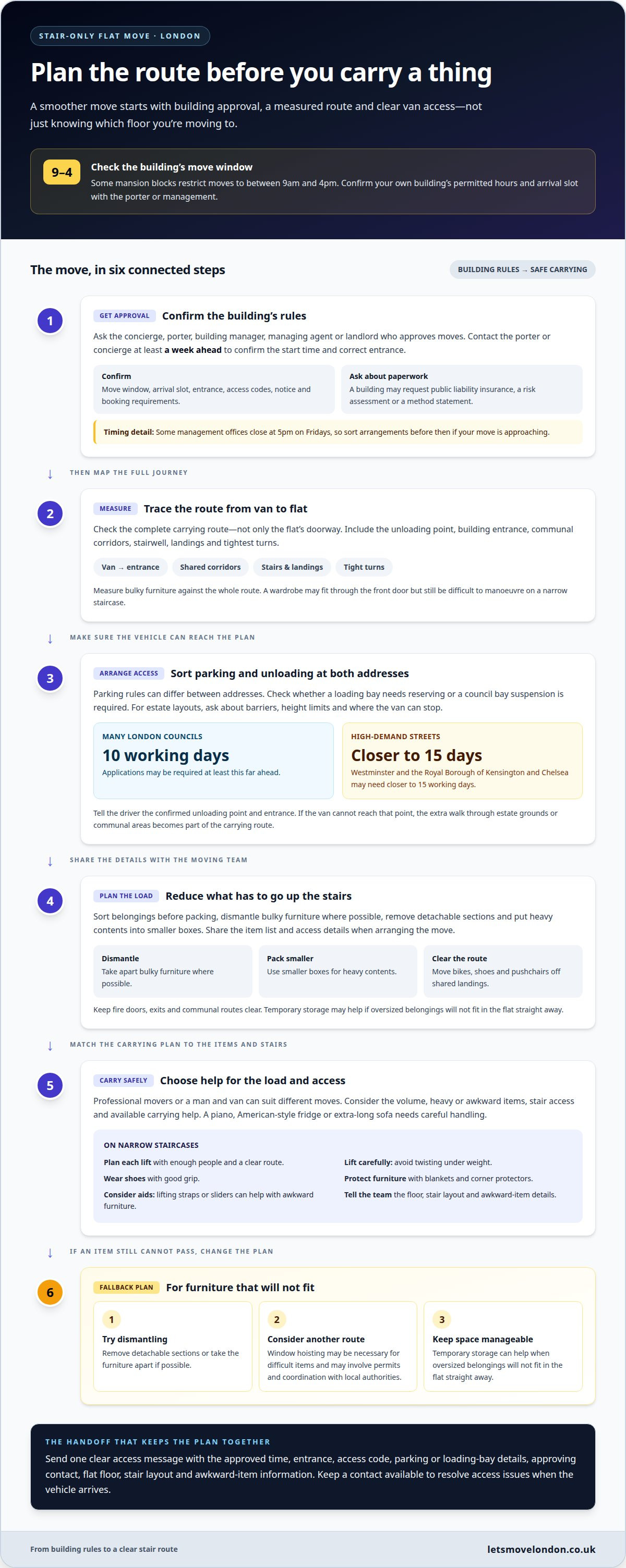
A stair-only move is manageable when the route, building rules and van access are planned before moving day. Moving into a flat with no lift in London means carrying belongings up each flight and along communal routes, so measure bulky furniture against the stairwell and landings before deciding what to bring. Some mansion blocks also set move-in hours, with porter rules potentially limiting moves to between 9am and 4pm.
The stairs may be the most obvious challenge when moving into a flat with no lift in London, but they’re only part of the job. A service entrance, restricted unloading point or narrow turn can affect how safely and efficiently furniture reaches your flat. It’s understandable to be concerned about access, especially when moving a large sofa or wardrobe.
This guide explains how London building layouts affect a flat move, which access details to establish and how to prepare furniture and belongings for a stair-only route. You’ll also learn what information helps plan the move and why the whole journey from the van to your front door matters, not just the floor number.
Table of Contents
1. Access challenges in different London building types
London’s varied buildings can change the route, timing and vehicle access for a flat move. A converted Victorian terrace may contain several flats, with narrow stairs, shared landings and tight turns. Measure bulky furniture against the whole route, not just the flat’s doorways. A wardrobe that fits through the front door may still be difficult to manoeuvre on the staircase.
Mansion blocks can have porter-imposed move windows, such as no moves before 9am or after 4pm. Contact the porter in advance to confirm the permitted hours, entrance and any notice requirements. In modern managed developments, establish what needs booking, which details management requires, and how the unloading route works. Some buildings also require a loading bay reservation.
Estate layouts bring different constraints. Find out where the van can stop, whether barriers or height limits restrict access, and whether the driver needs help getting in. When requesting a quote, tell the removals team the flat’s floor, whether a lift is available, the stair layout, any narrow turns and the distance from the van to the entrance, including communal corridors.
Arrange parking by checking the rules for both addresses, as they can differ. Ask whether a loading bay must be reserved, and whether a council bay suspension is needed. Many London councils require applications at least 10 working days ahead; Westminster and the Royal Borough of Kensington and Chelsea need closer to 15 working days on high-demand streets.
Share the access plan with the driver before moving day. Confirm where the vehicle can unload and which entrance the crew should use. If the van cannot reach the planned unloading point, the extra walk through estate grounds or communal areas becomes part of the carrying route. Keep contact details for someone who can resolve access issues when the vehicle arrives.
2. Service entrances and building procedures
Start with the person who approves moves: a concierge, building manager, managing agent or landlord. Contact the porter or concierge at least a week before moving day to confirm the crew’s start time and the correct entrance. Some management offices close at 5pm on Fridays, so arrange the details before then if your move is approaching.
Ask about the building’s move window, arrival slot, entry codes and any approval process. A block may require advance notice or a reserved loading bay. Notice periods and charges vary by building and borough, so establish the arrangements for your specific address. Tell neighbours in advance if the move will use shared entrances or hallways.
Clarify how the crew should reach the flat. Some buildings require a service lift booking or protective padding, while a passenger lift may not be suitable for removals. If there’s no suitable lift, confirm which service entrance to use and how bulky furniture such as wardrobes should be carried through corridors. Keep fire doors, exits and communal routes clear.
Ask whether building management requires paperwork before the crew arrives. A building may request proof of public liability insurance, a risk assessment or a method statement. Send any requirements to the moving team in advance, along with the arrival slot, access instructions and relevant contact details. This helps the crew plan around the building’s procedures.
Keep the arrangements together in one message: approved time, entrance, access code, parking or loading bay details, and the name of the approving contact. For a flat move with shared access, clear instructions help prevent delays at the entrance. Use these details to organise your London moving arrangements around the building’s rules.
3. Moving into a flat without a suitable lift
When moving into a flat with no lift in London, measure the stairwell, landings and tightest turns, then compare them with your bulky furniture dimensions. Include the route from the street to the flat’s front door, not just the doorway. Converted homes can have narrow stairs where a sofa or tall wardrobe may not turn safely.
Professional movers or a man and van can suit different moves. Choose based on the volume, heavy or awkward items, stair access and help available for carrying. A piano, American-style fridge or extra-long sofa needs careful handling. A smaller load of manageable boxes may need a simpler arrangement. Share the item list and access details when arranging the move.
If furniture won’t fit, first consider dismantling it and removing detachable sections. If it still cannot pass, you may need another way to move it. Window hoisting can be necessary for difficult items and may involve permits and coordination with local authorities.
On narrow staircases, plan each lift with enough people and a clear route. Use proper lifting technique, avoid twisting under weight and wear shoes with good grip. Lifting straps or sliders can help with awkward furniture; blankets and corner protectors can help prevent scrapes. Clear bikes, shoes and pushchairs from communal landings before carrying begins.
To reduce the amount you need to carry, sort belongings before packing, dismantle bulky furniture where possible and pack heavy contents in smaller boxes. If oversized belongings won’t fit in the flat straight away, temporary storage can keep the stair route and rooms manageable.
Arrange movers once your date and building arrangements are taking shape. Required notice, move windows, parking and access all affect planning, so share those details early. When moving into a flat with no lift in London, a concierge’s arrival slot may also shape the start time.
4. Do London removal companies charge extra for stairs or upper-floor flats?
They can. A removals quote may include additional charges for collections or deliveries above the ground and first floors, or where access requires mechanical equipment. A flat on an upper floor with no lift involves a different carrying route from a ground-floor home.
Stairs affect the time and handling involved, but the floor number alone doesn’t describe the job. A Victorian terrace may have several flights, narrow landings or sharp turns. In an older mansion block, the route from the van may also cross communal areas. Each detail helps describe the work involved.
An upper-floor move can take around 22 minutes longer than a ground-floor move. That’s a useful illustration, not a universal allowance: stair layout, item size, carrying distance and unloading access all affect the schedule. A bulky wardrobe that needs dismantling can require different planning from boxes carried up clear stairs.
The price depends on the move and is provided after you request a quote. Relevant factors include the floor, number of flights, stair width, landings, furniture size and any mechanical equipment needed. Give the removals team those details when requesting a quote, and point out oversized pieces during the survey. Include access at both addresses, since a difficult collection route can matter as much as carrying items upstairs at delivery.
Ask for any additional charge to be explained before it is applied. A clear quote should reflect the actual route and handling requirements, not just the floor number. If plans change, such as a reserved loading point becoming unavailable, the revised access route may affect the work.
Share the floor, stair flights, tight turns and bulky-item details to help shape an accurate plan. Plan your flat move with the access information ready.
Let's Move London: Moving
Let's Move London can organise your move when stairs, tight turns or restricted building access make the carrying plan more demanding. Share the floor, stair layout, furniture dimensions, building time window and van access details so the team can plan around the route. Insurance is included with every move.
If belongings won’t fit in the flat straight away, storage can provide a practical option while you decide what to keep at home. For a smaller move, Let's Move London's man and van service may suit the amount you need to transport. The right option depends on your belongings and access requirements.
Contact Let's Move London to discuss your flat move and the access details that matter.
Set Up Your Move for a Confident First Day
Moving into a flat without a lift in London is easier to manage when you decide what matters most before packing begins. Choose the belongings you’ll need immediately, then plan how to unpack the rest around your new home’s layout. This gives you a clear first-day plan instead of facing every decision at once.
Make the next conversation practical by explaining what you’re moving, what needs special handling and what you want ready first. This gives the planning process a clear starting point and helps keep your priorities in view as moving day approaches.
For support with the next step, contact Let’s Move London to discuss your move. A well-prepared plan can make the transition feel more manageable, so you can focus on settling into your new flat.
Frequently Asked Questions
What should I ask a London removals company before booking a flat move with no lift?
Ask what information is needed to assess your belongings and plan the move accurately. Mention fragile or unusually shaped items, anything that needs dismantling, and belongings that must arrive first, such as a bed or essential kitchen box. Clarify what the quote covers and how changes to your inventory are handled. These details help align the moving plan with your priorities and the flat’s layout.
Do I need permission from my landlord or building management to move furniture in London?
It depends on your tenancy and the building’s procedures, so establish who approves moves at your address. A landlord may handle permission for a rented flat, while a concierge, building manager or managing agent may control shared access and move arrangements. Bringing furniture inside is different from altering fixtures or communal areas. Get approval before making changes, and keep any agreed arrangements in writing.
How far in advance should I book movers for a London flat with no lift?
Book once your moving date and building arrangements are taking shape, and share access details with the movers early. Contact the porter or concierge at least a week before moving day to confirm the crew’s start time and entrance.
How can I estimate the cost of a stair-only move by floor and number of belongings?
Request a quote and provide the floor, number of stair flights, stair width, landings, furniture size and access details at both addresses. Additional charges may apply for moves above the ground and first floors or where mechanical equipment is needed.


Comments