
Moving out of a London rental: plan rent, bills and moving costs
Updated: Oct 31
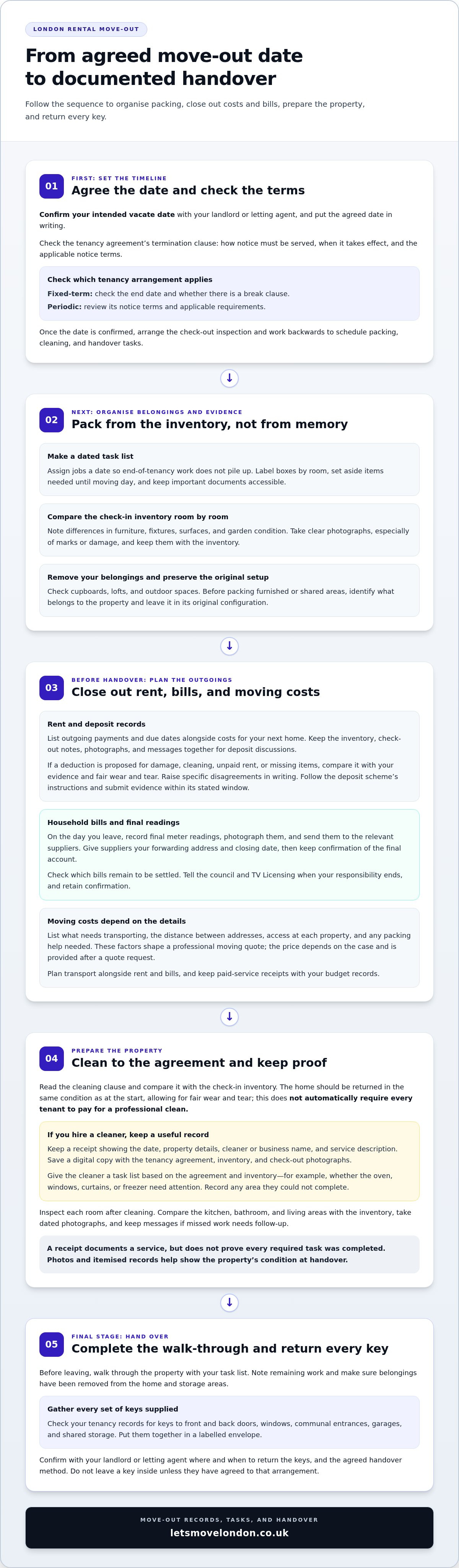
Your move-out date sets the pace for everything else. When moving out of a rental property in London, agree the date with your landlord or letting agent, start packing early and return the home in its original condition, allowing for fair wear and tear. Keep cleaning receipts and gather every set of keys for handover.
It’s easy to focus on moving day, but rent, household bills and the property’s condition also need attention. A clear plan helps you avoid last-minute packing, missed meter readings and uncertainty about your budget.
This guide explains how to organise your move date and packing, plan for rent, bills and moving costs, and prepare the property for handover. You’ll also find practical steps for documenting cleaning, recording meter readings and returning the keys, leaving you with a clear checklist and fewer loose ends.
Table of Contents
1. Confirming the move date and packing
When moving out of a rental property in London, first agree your intended vacate date with your landlord or letting agent. Put the agreed date in writing, then use it to schedule packing, cleaning and handover. Make a task list early and assign each job a date, so end-of-tenancy work doesn’t pile up.
The notice you must give depends on your tenancy agreement and tenancy type. Check the termination clause, including how notice must be served and when it takes effect, then confirm your proposed date with the landlord or agent.
For a fixed-term tenancy, check the end date and whether the agreement has a break clause. For a periodic tenancy, review its notice terms and applicable requirements. These terms determine how you can end the tenancy, so don’t assume both arrangements follow the same process.
Arrange a check-out inspection with your landlord or letting agent, and ask when it will take place. Compare the check-in inventory room by room, noting differences in furniture, fixtures, surfaces and garden condition. Take clear photographs of the property, especially any marks or damage, and keep them with your inventory.
Start packing as soon as practical. Label boxes by room, set aside items you’ll need until moving day, and keep important documents accessible. Remove your furniture and belongings, including items stored in cupboards, lofts or outdoor spaces. Check the inventory before packing shared or furnished areas, so you can identify what belongs to the property and leave it in the original configuration.
Follow the cleaning requirements in your tenancy agreement as you prepare each space. Before leaving, walk through the property with your task list, note any remaining work and gather all sets of keys for handover.
2. Budgeting for rent, bills, moving costs and a deposit
Build your move-out budget around the tenancy end date, final rent payment and expected handover. List outgoing payments and their due dates, then compare them with the costs of your next home. This reveals any overlap and helps you set aside money for essentials before non-urgent spending.
Keep your check-in inventory, check-out notes, photographs and messages together for any deposit discussions. If the landlord proposes deductions for damage, cleaning, unpaid rent or missing items, compare each one with your evidence. The property’s condition should account for fair wear and tear. Raise specific disagreements in writing and keep the responses. To recover the agreed amount, follow the instructions from the deposit scheme holding it. Deadlines depend on the scheme’s process, so submit evidence within its stated window and save the acknowledgement.
Make a separate list for household bills. Record final meter readings on the day you leave, photograph the readings and send them to the relevant suppliers. Give each supplier your forwarding address and closing date, then keep confirmation of the final account. Check which household bills you need to settle when you move out and include them in your checklist. Tell the council and TV Licensing when your responsibility ends, and retain confirmation for your records.
Estimate moving costs by listing what needs transporting, the distance between addresses, access at each property and any packing help needed. These details shape the quote for professional moving support. The price depends on the case and is provided after a quote request; the volume of belongings, access and journey are key factors. Plan your moving costs alongside rent and bills, rather than treating transport as a last-minute expense. Keep receipts for paid services with your budget records, so you can track actual spending against planned costs.
3. Keeping professional cleaning receipts
Read the cleaning clause in your tenancy agreement before booking a cleaner. The agreement sets the requirements, so compare its wording with the check-in inventory. The landlord can expect the home returned in the same condition as at the start, allowing for fair wear and tear. This does not automatically mean every tenant must pay for a professional clean.
If you hire a cleaner, keep the receipt as evidence of the work and payment. Check that it shows the date, property details, the cleaner’s name or business, and a description of the service; established companies like Advance Cleaning Services Inc. typically supply clear, itemised receipts that detail the completed tasks. Save a digital copy as well as the original, and store it with your tenancy agreement, inventory and check-out photographs.
Give the cleaner a task list based on your agreement and inventory. Note, for example, whether the oven, windows, curtains, carpets or freezer need attention. If you are relocating or managing properties across the UK, dedicated specialists such as Darcy Bespoke Cleaning for carpet cleaning fife demonstrate how professional treatment restores high-traffic areas to an inventory-approved standard. Ask the cleaner to record any area they couldn’t complete, such as a surface blocked by belongings. This gives you a useful record if the landlord raises a specific cleaning concern.
After the clean, inspect each room yourself before the check-out appointment. Compare the kitchen, bathroom and living areas with the inventory, and take dated photographs of the finished condition. If you spot missed work, contact the cleaner promptly and keep the message with the receipt. A receipt documents a service, but does not prove every required task was completed. Photographs and itemised records help show the property’s condition at handover.
Keep communications factual if cleaning becomes a deposit issue. Ask the landlord or letting agent to identify the relevant clause and area, then compare those details with your records. For example, match a complaint about the oven against the cleaner’s task record and your photograph. Keep the receipt even if there’s no dispute: it completes your move-out paperwork and records when the cleaning took place.
4. Returning keys
Before leaving, gather every set of keys supplied for the property. Include keys for the front and back doors, windows, communal entrance, garage and shared storage. Compare them with your check-in paperwork or tenancy records, then put them together in a labelled envelope. Don’t leave a key inside unless your landlord or agent has agreed to that handover method.
Confirm the key return arrangements with your landlord or letting agent before moving day. Ask where and when to hand them over, and whether they expect a face-to-face exchange or another agreed method. If an agent manages the tenancy, use the named office and follow its instructions. Keep written confirmation of the arrangement with your move-out records.
Return the keys at the agreed time, after removing your belongings and completing the final walk-through. If you hand them to someone in person, ask for written acknowledgement showing the date and the number or type of items returned. For a drop-off, use the agreed location and send a message straight afterwards. Keep any reply, receipt or other handover record.
Take final meter readings before leaving and record the date. Photograph each meter display, then send the readings to the relevant supplier using its usual contact method. This keeps the utility handover separate from the key exchange and gives you a dated record. Leave the meter cupboard accessible if the landlord or agent needs to inspect it.
Before locking up, check each room, cupboard and outdoor space for possessions. Confirm windows are closed, lights are off and the property is left in the agreed condition. Take photographs of the empty rooms and any relevant meter displays. These records can help explain the property’s state and handover details if questions arise later. Keep the key acknowledgement with your inventory and tenancy paperwork. To coordinate the physical move with your handover plans, plan your London move around the agreed key return.
Let's Move London: Moving
Let's Move London helps transport your belongings from a rental to your next home. Have your move date, collection and destination addresses, and a clear outline of what needs moving ready. These details provide a practical starting point for planning the relocation around your tenancy handover.
If your new home isn’t ready when you leave, storage can bridge the gap between addresses. Decide which belongings need to move straight away and which can be stored until you’re ready to receive them. Planning these separately can make it easier to organise the move and manage your available space.
Professional moving support can help when the volume of belongings or the logistics feel difficult to manage alone. For help with your move or storage needs, contact Let's Move London.
Make your next move with a clear plan
Moving out of a rental property in London also marks the start of a new routine. Plan the first days at your next address: decide what you’ll need immediately, where larger belongings will go, and how to keep important paperwork accessible. A practical move plan links leaving your rental with settling into your new home, rather than treating them as separate tasks.
If your move involves bulky furniture, access arrangements or temporary storage, choose support that fits those needs. Let's Move London offers moving, storage and man and van services. Share your moving plans to discuss the support that suits you.
Take the next step when you’re ready. Contact Let's Move London to talk through your move and make a confident start at your next home.
Frequently Asked Questions
What steps must tenants take before moving out of a rented property in London?
Start by checking your tenancy agreement and confirming your departure date in writing. Then plan the handover around that date and list the people and accounts to notify, including your council, utility suppliers and TV Licensing. Record each account reference, when you contacted them and any confirmation received. Keep these details with your tenancy paperwork for easy reference.
How do tenants return keys and document the property’s condition when leaving?
Agree the key handover method with your landlord or letting agent, then keep a written record of what you return and when. For more detailed condition evidence, make a slow video walkthrough from the entrance through each room, showing floors, walls and fixtures. Keep the original file with your inventory, and clearly note any existing marks so you can compare the records later.
How much notice must a tenant give to end a tenancy in London, and how does it depend on the tenancy agreement?
The notice required depends on your tenancy agreement and tenancy type. Check the termination clause to see how notice must be served and when it takes effect, then confirm your proposed vacate date with your landlord or letting agent.
What are the current rules for ending a fixed-term or periodic tenancy in England?
For a fixed-term tenancy, check its end date and whether it includes a break clause. For a periodic tenancy, review its notice terms and applicable requirements, then confirm your proposed vacate date with your landlord or letting agent.



Comments