
Office relocation in Epping with less business disruption
Business disruption is easier to manage when an office move is planned around the work that must continue. An office relocation in Epping involves coordinating workplace furniture, equipment and files, then planning packing, access and timing. Epping is the last stop on the Central Line, a useful local detail when considering staff travel during the move.
It’s understandable to focus on keeping teams working and limiting downtime. This guide explains what commercial relocation services in Epping can involve, which practical details shape the plan, and how to prepare staff and workspaces for moving day. You’ll also learn how to reduce avoidable disruption and where professional moving and storage support from Let's Move London can fit into your plans.
Table of Contents
Office relocation services in Sewardstone Epping Forest
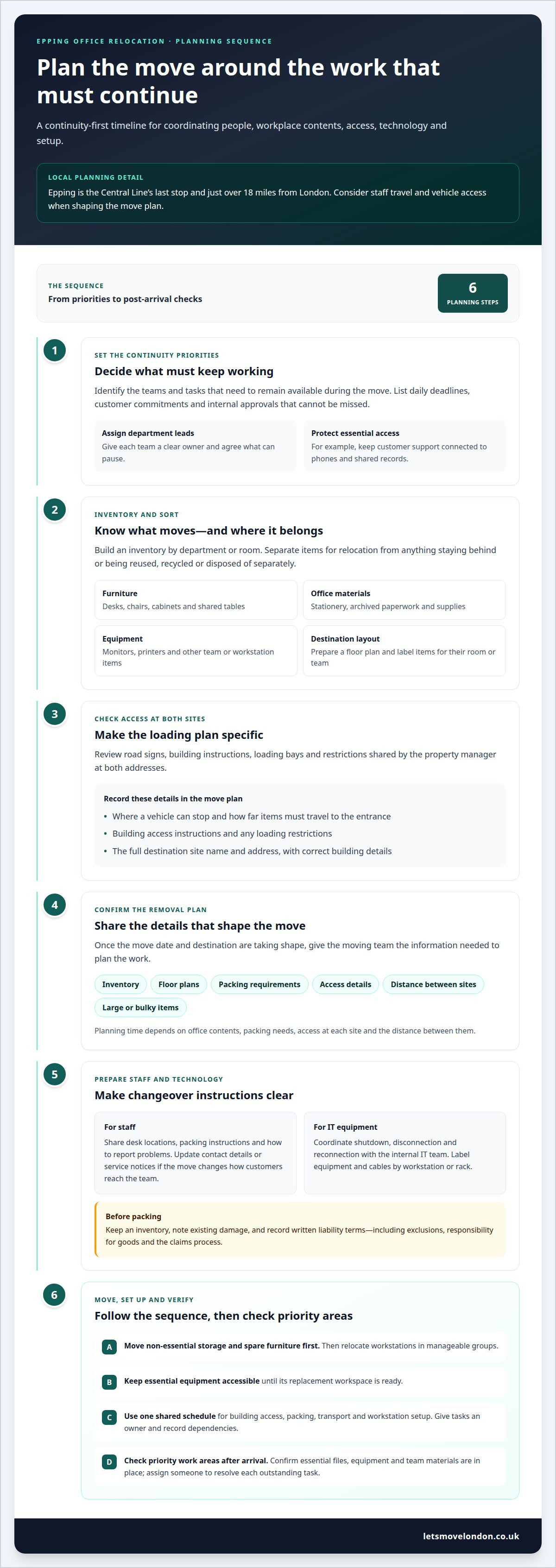
An office relocation in Epping can include moving desks, equipment, files and packed supplies between workplaces. Epping is the Central Line’s last stop and just over 18 miles from London, making access planning relevant for staff and moving vehicles.
Parking and Loading Restrictions
Before moving day, check the loading arrangements at both addresses in Epping Forest or Sewardstone. Review road signs, building access instructions, loading bays and any restrictions communicated by the property manager. Note where a vehicle can stop and how far items must travel to the entrance. Share these details in the move plan so the team can sequence loading and avoid blocked access.
Booking Office Movers
Book once your move date and destination are taking shape. Planning time depends on the office contents, packing requirements, access at each site and the distance between them. Give the moving team an inventory, floor plans and details of large items early. For example, flag shared meeting tables, filing cabinets and bulky equipment that need careful handling.
Commercial relocations focus on workplace contents and the order they must arrive. Residential moves involve household belongings, while a combined move may need separate inventories and packing plans. In Sewardstone and nearby Epping Forest, list what is moving, what needs packing and which rooms or departments should be unloaded first.
For IT and servers, coordinate the physical move with your internal IT team. Schedule shutdown, disconnection and reconnection, and label equipment and cables by workstation or rack. Record the written terms for liability cover, including exclusions, responsibility for goods and the claims process. Keep an inventory and note existing damage before packing.
Separate office furniture for relocation from surplus items before packing begins. Mark reusable desks and chairs for transfer, then identify furniture for reuse or recycling and organise its disposal separately. A clear inventory distinguishes items being moved from those staying behind or leaving the premises.
New City College’s Epping Forest Campus is in Loughton. When confirming a destination, use the full site name and address in the move plan, and give the crew the correct building details. This keeps instructions clear when arranging delivery of office furniture, equipment and files.
Minimising disruption to business operations
Start with a continuity plan that identifies which teams must keep working during the move. For example, customer support may need access to phones and shared records while finance relocates its desks. Assign a lead for each department, then agree what can pause and what must remain available. This gives staff clear priorities instead of competing instructions.
Choose a move sequence that reflects those priorities. Relocate non-essential storage and spare furniture first, then move workstations in manageable groups. Keep essential equipment accessible until its replacement workspace is ready. A department checklist can record what has moved, what still needs connecting and who will approve the new layout.
Protect key tasks: list daily deadlines, customer commitments and internal approvals that cannot be missed.
Prepare staff: share their new desk locations, packing instructions and the route for reporting problems.
Coordinate technology: agree with your IT team when equipment will be disconnected and tested at the new site.
Keep customers informed: update contact details or service notices if the move changes how people reach your team.
For an office relocation in Epping, use one shared schedule for building access, packing, transport and workstation setup. Give each task an owner and record dependencies. For instance, staff cannot test a workstation until its equipment is in place and the required connections are ready. A central schedule helps managers spot clashes before they interrupt service.
After arrival, check priority work areas before declaring the move complete. Confirm that essential files, equipment and team materials are where staff expect them. Record outstanding tasks, such as a missing chair or an unlabelled box, and assign someone to resolve each one. For further commercial moving guidance, explore practical planning ideas for keeping a workplace transition organised.
Commercial removals in Epping
Commercial removals in Epping coordinate the transfer of workplace contents between business premises. A small office may need desks, chairs and archived files moved, while a larger workplace may also involve meeting-room furniture, stock and specialist equipment. Start by separating items for relocation from anything staying at the current premises.
Build an inventory by department or room, then label each item for its destination. For example, mark reception furniture separately from finance workstations, and group boxed files by team. This gives the unloading team a clear reference and helps managers spot missing items against the original list.
A practical removal plan can include:
Workplace furniture: identify desks, chairs, cabinets and shared tables.
Office materials: group stationery, archived paperwork and department supplies.
Equipment: label monitors, printers and other items by workstation or team.
Unwanted contents: separate surplus items before packing to avoid transporting them unnecessarily.
For offices in Sewardstone or Epping Forest, prepare a destination floor plan before loading. Mark where each department, cabinet and shared resource belongs. A clear layout helps prevent boxes from being placed in the wrong room, which can slow staff as they resume work.
The scale of a commercial move depends on the contents, packing needs, access at both premises and the handling required for particular items. These factors also shape the removal plan and quote. Share an inventory, packing requirements and access details so the move can be assessed accurately.
Before moving day, assign a workplace contact to answer questions about labels, room names and priority items. For example, that person can resolve whether a cabinet belongs in the records area or a team office. Keep the inventory updated as contents are packed and delivered, giving the business a usable record throughout the move.
How to plan an office relocation step by step
Planning an office relocation in Epping starts by confirming the destination, move date and responsible decision-makers. Create one working document for deadlines, contacts, inventories and outstanding decisions. Include department leads, building contacts and the person coordinating the move. Track changes there so staff work from the same plan.
Set the scope. List each department, work area and shared room included. Record what is moving, staying or being replaced, such as reception seating or meeting-room tables.
Map the new workplace. Prepare a floor plan showing departments, workstations and shared equipment. Assign each team a destination area before labelling boxes or furniture.
Build the schedule. Work backwards from the agreed move date. Add packing, building access, transport, delivery and workstation setup as separate tasks, with an owner for each.
Prepare staff. Send clear instructions covering personal items, desk labels and where employees should report at the new site. Share changes promptly if a room or team assignment moves.
Review readiness. Before moving day, check that access arrangements, inventories and the floor plan match. At the new office, compare delivered items against the inventory and record unresolved tasks.
Keep decisions visible throughout the process. A simple status column, such as “planned”, “under way” or “complete”, helps managers see which tasks need attention. For example, a delayed workstation setup can affect the team relying on it, so update the schedule and notify that department’s lead.
Use the completed plan to organise your move with practical office moving guidance and keep the next steps clear.
Let's Move London: Moving
Let's Move London supports Epping office moves with professional moving and storage services. Turn to the team when you’re ready to put your inventory, access arrangements and destination plan into action. Moving helps transfer workplace contents to the new premises, while storage provides an option for items that don’t need to go straight into the working space. Insurance is included with every move.
Share your move details and priorities to plan arrangements around your business’s requirements. A clear outline of what’s moving and what needs storing helps you take the next step with an organised plan.
Contact Let's Move London or visit letsmovelondon.co.uk to discuss your move.
Set your Epping move in motion
A commercial move is also a chance to make the new workplace fit the way your team works. Before confirming arrangements, decide which departments need priority access, what should be ready first and who will make final decisions on moving day. These choices turn your office relocation in Epping from a transport task into a practical transition for your business.
Prepare a concise brief with your preferred timing, destination details and the items requiring particular attention. Let's Move London offers moving, storage and man and van services to support your plans. Start with a clear outline of what needs to move and how the new space will be used.
Take the next step when you’re ready: contact Let's Move London to discuss your move. With priorities agreed and a plan taking shape, you can approach the transition with greater clarity and get your team ready for its next chapter.
Frequently Asked Questions
How much does an office move in Epping cost?
The cost depends on the move’s requirements, and a quote is provided after you share the details. The volume of office contents, distance between premises, packing needs and access arrangements can all shape the assessment. For example, a workspace with bulky furniture and several departments has different needs from a small office moving a few desks. Prepare an inventory and both addresses to describe the job.
How far in advance should you book office movers in Epping?
Book once your move date and destination are taking shape. The planning time needed depends on your office contents, packing requirements, access at both sites and the distance between them.


Comments