
Packing Materials for Moving in London: Boxes and Supplies
You don’t need to buy every box new. For packing materials for moving in London, start with sturdy boxes from local shops or reuse boxes from a previous move if they’re clean, dry and undamaged. Gather supplies about a week before moving day rather than leaving it until the last minute.
It’s sensible to look for supplies that protect your belongings without creating unnecessary waste or expense. You can buy new boxes and packing materials, or reuse suitable boxes and household items to pack more sustainably. The key is choosing materials sturdy enough to keep your belongings secure in transit.
This guide explains where to find boxes, what to consider before buying supplies, and how to reuse or recycle materials after your move. It also covers practical delivery and collection points, so you can plan what to bring into your home and what to do with it after unpacking.
Table of Contents
Do I need to buy moving boxes and packing materials?
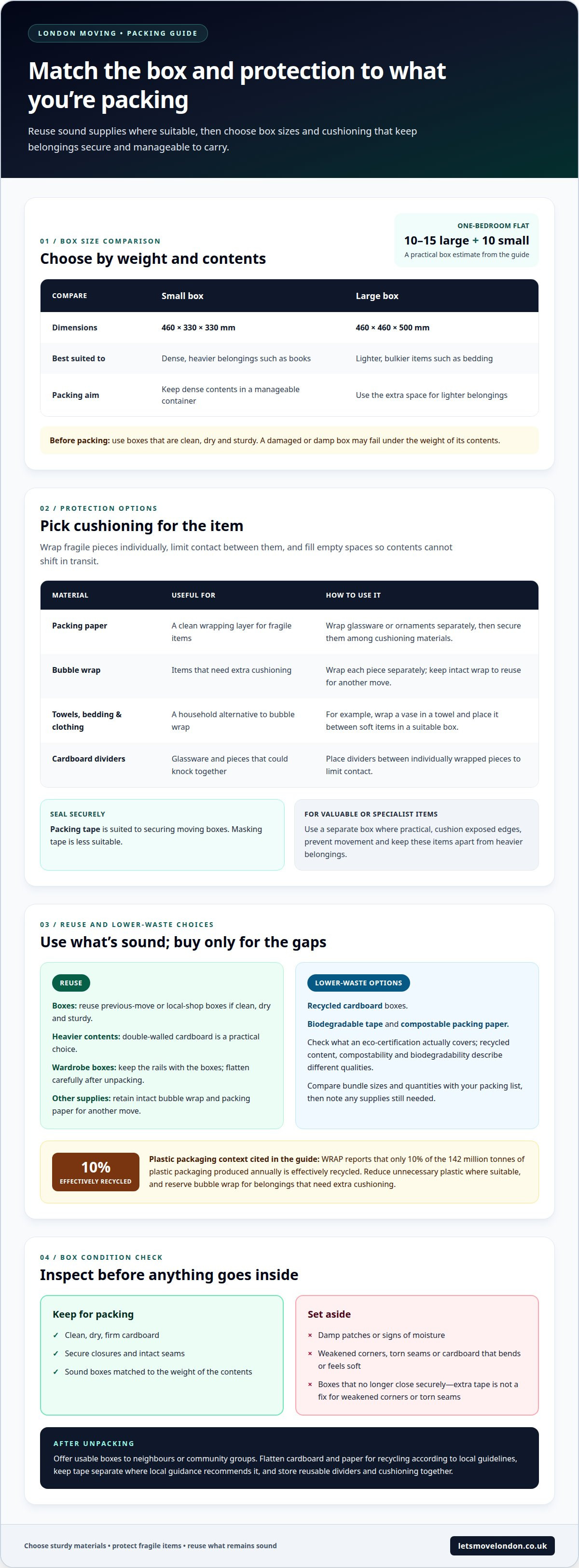
Not always. For packing materials for moving in London, reuse sound boxes and household textiles where suitable, then buy supplies for gaps or delicate belongings. A standard one-bedroom flat may need 10-15 large boxes and 10 small boxes.
Packing Household and Office Items
Pack books, clothing, kitchenware, files and desk accessories in sturdy boxes. A small moving box measures 460 x 330 x 330 mm, while a large one measures 460 x 460 x 500 mm. Use small boxes for dense items such as books, and larger boxes for lighter belongings such as bedding. This keeps each packed container manageable to carry.
For an office move, group files by department or project and label each box clearly. Separate stationery from equipment, and keep cables with the devices they belong to. Before packing, sort items by room or workstation. This makes unloading and finding essentials more straightforward.
Protection for Specialist and Valuable Items
Fragile, valuable and specialist belongings need protection suited to their shape and materials. Wrap glassware individually, then place cardboard dividers between pieces to limit contact. Use a snug box and fill empty spaces so the contents cannot shift. Loose items can knock against the box or one another during handling.
For framed pieces, ornaments or delicate equipment, use a separate box where practical. Mark the contents clearly and keep valuable items apart from heavier belongings. Specialist items may need a tailored packing approach rather than ordinary household wrapping. Cushion exposed edges and prevent movement inside the box.
Fragile-Item Wrapping Options
Packing paper and bubble wrap both help cushion fragile items. Wrap each glass or ornament separately, then secure it among cushioning materials. Cardboard dividers are another option for glassware. Seal boxes with packing tape rather than masking tape, which is less suited to securing moving boxes.
Prefer a plastic-free option? Towels, bedding and clothing can cushion fragile belongings instead of bubble wrap. For example, wrap a vase in a towel and place it between soft items inside a suitable box. Choose materials that cover the item fully and keep it from shifting. This reduces the need for extra wrapping while making use of household items you’re already moving.
Reusing and recycling moving boxes in London
Reusing materials can reduce the number of new boxes and packing supplies you need. Before packing, sort supplies by condition and set aside any damaged or damp cardboard.
Reusing Boxes and Renting Crates
Reuse boxes from a previous move or local shops if they remain clean, dry and sturdy. Double-walled cardboard boxes are a practical choice for heavier belongings, while lighter packaging can suit clothes and linens. Keep wardrobe boxes with their rails for hanging garments, then flatten them carefully for storage after unpacking. Plastic crates can also be rented and reused after cleaning.
Set aside intact bubble wrap and packing paper for another move. Keep tape separate from recyclable cardboard where local guidance recommends it, and avoid throwing useful supplies away with general waste. A dedicated preparation area makes it easier to sort boxes, paper, tape and reusable cushioning together.
Checking Box Condition
Inspect every box before packing. Look for damp patches, weakened corners, torn seams and closures that no longer secure properly. Press lightly on the base and sides, and reject cardboard that bends, feels soft or shows signs of moisture. Damp boxes can collapse under the weight of your belongings.
Match each box’s condition to its contents. Use sound, firm boxes for heavier items, and reserve smaller or less robust containers for light objects. Don’t rely on extra tape to repair a torn seam or weakened corner. A box that cannot close securely is unsuitable for moving.
After unpacking, offer usable boxes to neighbours or community groups. Flatten cardboard and paper for recycling according to local guidelines, and store reusable wardrobe boxes, dividers and cushioning together for future use. Clean, dry materials are easier to store without damage.
For a move that needs coordinated practical support, explore moving support alongside your packing preparation.
Recycled and eco-certified packing supplies
Lower-waste supplies can help with a London relocation without leaving delicate belongings unprotected. Options include recycled cardboard boxes, biodegradable tape and compostable packing paper. Choose materials based on what needs cushioning, how many boxes you need and how you’ll handle packaging after unpacking.
Plastic packaging remains a concern: according to WRAP, only 10% of the 142 million tonnes of plastic packaging produced annually is effectively recycled. This makes reducing unnecessary plastic a practical consideration when selecting bubble wrap and other protective supplies. For example, use paper for items that need a clean wrapping layer, and reserve bubble wrap for belongings that need extra cushioning.
Check what an eco-certification actually covers. Look for the relevant details on the packaging rather than relying only on words such as “green” or “eco”. Recycled content, compostability and biodegradability describe different qualities, so match the claim to the material and its intended disposal route.
Moving-box bundles can bring boxes and protective supplies together. Before choosing one, compare the sizes and quantities with your packing list. A bundle with several small boxes may suit books or dense office files; larger boxes may be more useful for lighter household items. Check whether paper, tape or cushioning is included, then note any supplies you still need.
Supply costs depend on the quantity, box sizes and wrapping materials selected. An itemised list makes it easier to compare a bundle with individual supplies and avoid buying materials you won’t use. When planning a move with Let's Move London, discuss your packing needs, including belongings going into storage. If you’re packing yourself, group supplies by room and keep materials for delicate items together before you start.
Removal box delivery and collection
Arrange packing-material delivery early enough to have supplies ready before moving day. Delivery timing and fees depend on the order value and destination across Greater London.
These figures help you estimate delivery costs, but check which area and order value apply to your delivery.
Standard delivery from a North London warehouse usually takes 2-3 working days. Build that into your booking schedule, especially if you need boxes before starting a full packing plan. Express delivery may suit a tighter timetable, but no express delivery time or fee is available here to compare. Base your plan on the standard timeframe rather than assuming faster handling.
Prepare a concise order list before arranging delivery. Include box quantities, packing paper, tape and bubble wrap, then consider where you’ll store each item until packing begins. A clear list helps prevent missing supplies from disrupting room-by-room preparation or the handling of furniture and fragile belongings. Keep the route to the storage area clear, too.
Unused, undamaged boxes can be collected and refunded by the removal team at the end of moving day, but not afterwards. Keep eligible boxes together and accessible while the team is still present. Damaged or used boxes don’t meet the collection conditions, so separate them from unused stock before collection.
Coordinate delivery and collection with your removals schedule to reduce last-minute stress. Arrange your move with the packing and box timing in mind.
Let's Move London: Moving
Lets Move London can coordinate your move when packing, transport and timing feel difficult to manage alone. Its removal service gives you professional support handling your belongings from one property to another, with insurance included in every move.
If your new home isn’t ready, secure storage can help bridge the gap between moving out and moving in. A man and van service may suit a smaller move or fewer belongings. The right option depends on what you’re moving and the support you need.
Share the key details of your move, including the properties involved, the belongings to transport and any storage needs. This gives the team a clear starting point for planning the next steps. Contact Let's Move London to discuss your move.
Set Your Move Up for a Steadier Start
Make your next step a clear packing plan. Decide which belongings need careful handling, what you can pack yourself and where professional support would ease the workload. Planning packing materials for moving in London alongside the wider move can help connect preparation, transport and unpacking.
Consider how your move will work in practice: the volume of belongings, access at each property and whether your dates align. If plans change or your new home isn’t ready, storage may help bridge the transition. For a smaller load, a man and van service may be suitable. Choose the level of support that fits your circumstances, without adding services you don’t need.
When you’re ready to discuss the move, contact Let's Move London. A clear conversation about your plans is a practical first step towards an organised relocation. You can move forward with a plan that feels manageable.
Frequently Asked Questions
Where can I find boxes for moving?
Look for moving boxes at local shops, moving-supply retailers or online, and ask neighbours if they have sturdy boxes left from a recent move. Choose boxes suited to their contents rather than collecting every size available. For example, use a smaller container for dense items and reserve larger boxes for lighter belongings. Inspect second-hand boxes before packing, especially if they’ve been stored somewhere damp.
How much do packing supplies for moving house cost?
The total depends on how many supplies you need and what you already have. A move requiring boxes, tape, paper and protective wrapping will involve different purchases from one using reused boxes and household textiles. Make a room-by-room list, then separate essentials from optional extras. This helps you avoid duplicate purchases and compare bundles with individual materials.
What packing materials are needed for a house move in London?
Most household moves use boxes, packing tape and cushioning for items that could be scratched or broken. Add paper for wrapping, dividers for separating glassware, and labels to identify each box’s destination room. For example, mark a kitchen box “fragile” and note whether it contains crockery or utensils. The right combination depends on what you own, how it will travel and what you can safely reuse.
How much do moving boxes and packing materials cost in London?
There isn’t one total that suits every London move. Your materials spend depends on the number and type of boxes, how much protective wrapping you need, and whether delivery is part of the order. Start with an inventory of your belongings and the supplies already available at home. Then price only what’s missing, including any specialist protection needed for delicate or valuable possessions.
Where can I buy packing materials for moving in London?
For packing materials for a move in London, consider local shops, moving-supply retailers and online sellers. Choose a source based on the box sizes, protective materials and delivery arrangements that suit your plan. If you buy in person, you can judge the box condition before taking it home. Order or collect supplies early enough to organise them before packing begins.
Do London removal companies supply packing materials or moving kits?
Some removals companies provide packing assistance or materials, but the details vary. Let's Move London offers packing help and materials, giving you the option to include practical support in your move planning. This can suit households that have fragile belongings, limited time to pack or a combination of packing and transport needs. Ask about the packing approach as part of arranging your move.


Comments